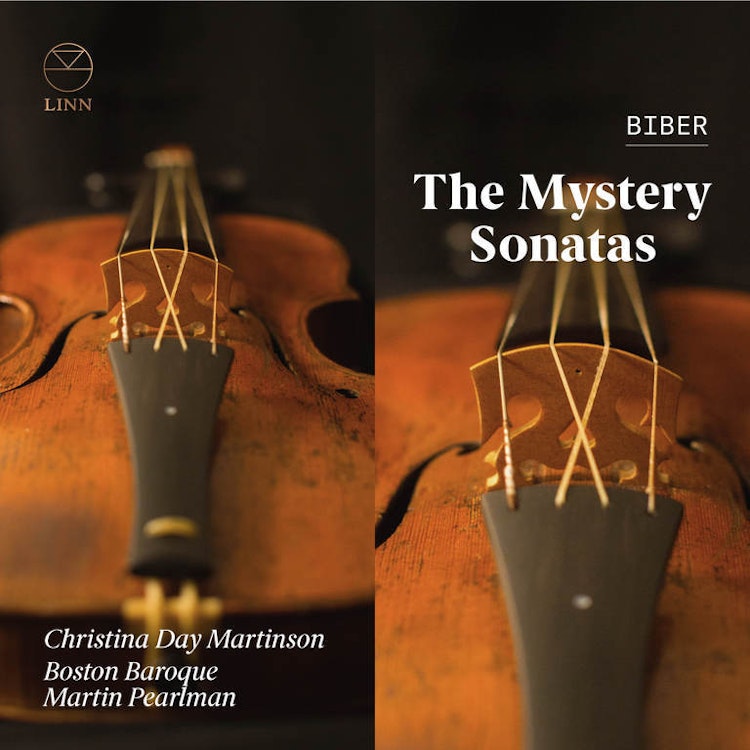
Due to the extensive retuning required between sonatas, this performance uses multiple violins, with one violin reserved specifically for Sonata XI 'The Resurrection'.
Composer Biography
Heinrich Biber, a renowned violinist of his era, worked at the archbishop's court in Salzburg from the 1670s until his death, eventually rising to the rank of Kapellmeister and receiving a title of nobility.
Historical Context
The Mystery Sonatas, also known as the Rosary Sonatas, were dedicated by Biber to his employer, Archbishop Maximilian Gandolf, who was a member of the Confraternity of the Rosary in Salzburg.
Composition History
The Mystery Sonatas survive in only a single manuscript from the 1670s, which includes fifteen sonatas for violin and continuo, plus a concluding Passacaglia for unaccompanied violin.
Compositional Technique
Heinrich Biber's Mystery Sonatas are unique for their use of scordatura, where the violin's strings are tuned differently for almost every sonata.
Compositional Technique
In Sonata XI 'The Resurrection,' the middle two strings of the violin are physically crossed over each other in the peg box and behind the bridge, creating a visual cross.
Compositional Technique
The scordatura tunings in Biber's Mystery Sonatas allow the violinist to play chords normally impossible and cause the instrument to resonate differently for each sonata.
You might also enjoy...
Lebègue: Pièces de clavessin
Veracini: Sonate da camera, Op. 2
Lovers and Mourners: Variations and Sonatas from 17th-Century Germany
Corelli's Legacy
Telemann: Sonatas for Violin & Harpsichord
Marcello, A.: Oboe Concerto in D Minor / Telemann, G.P.: Oboe Concerto in F Minor / Handel, G.F.: Oboe Concerto No. 3