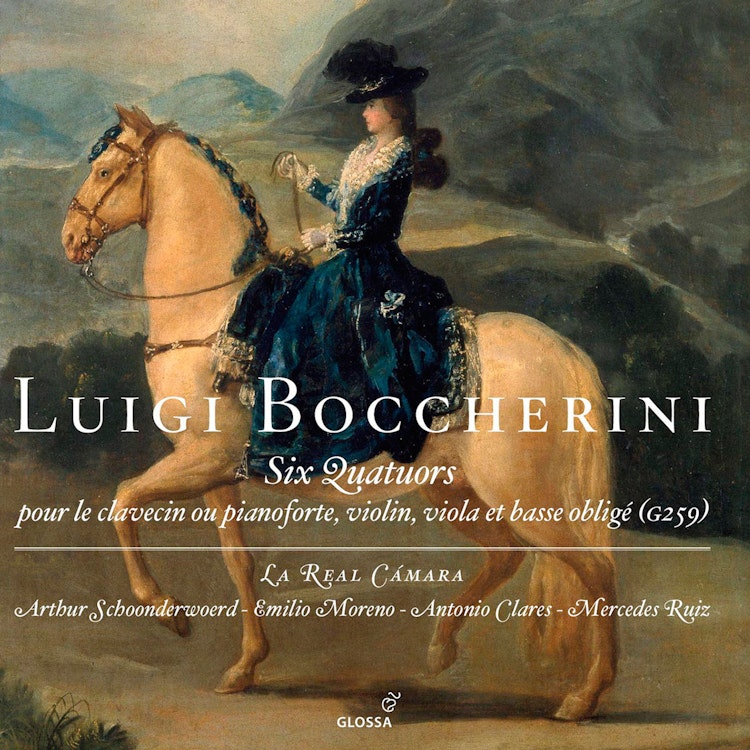
The Dresden manuscript (G 259) of these quartets adapts the original string quartet material for keyboard, violin, viola, and cello, with the keyboard taking the first violin part.
Instruments
The fortepiano used in this recording is a 2009 replica by William Jurgenson, based on an original 1793 instrument by Johann Andreas Stein, a German maker.
Recording & Production
This album was recorded in Girona, Spain, in January 2011, and features the ensemble La Real Cámara.
Composition History
Luigi Boccherini's Six Quatuors (G 259) are arrangements of his seventh series of string quartets, Op. 26, which were originally composed in 1778.
Composer Biography
Boccherini settled in Spain in 1778, ten years after his arrival, and lived a relatively peaceful life in the service of Infante Don Luis, who was exiled to Arenas de San Pedro.
Historical Context
The practice of transcribing music for different instrumentations, especially for keyboard, was common in Boccherini's time to make music accessible to a wider audience.
Composer's Artistic Vision
Boccherini believed music should speak to the heart, stating, "Music without emotion and passion is meaningless."