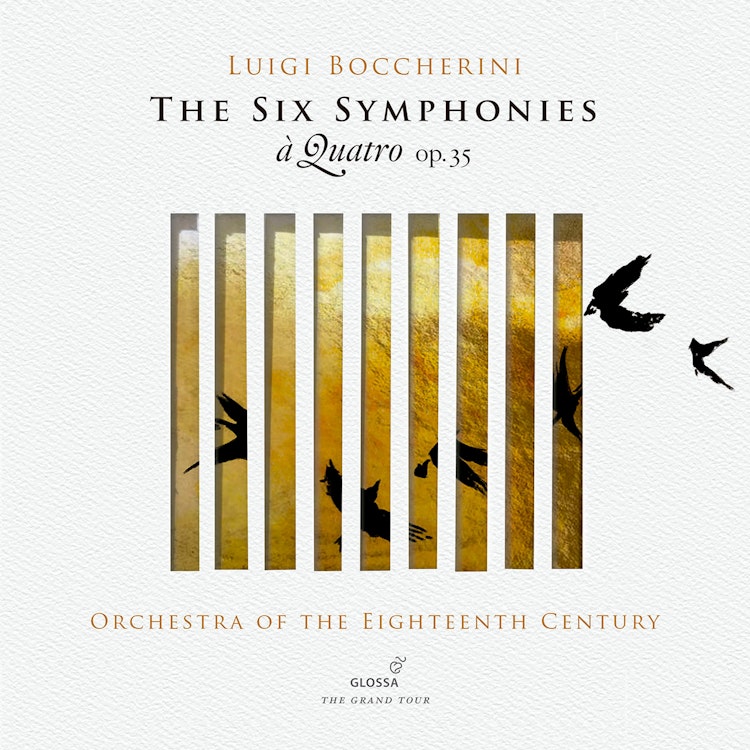
Boccherini's Op. 35 Symphonies are scored for four parts (two violins, viola, cello, and basso), with optional wind instruments, and are more chamber-like than orchestral.
Composer's Artistic Vision
Boccherini's musical language, developed during his 'gilded cage' exile, blended French, Italian, and Spanish styles, creating a unique and melancholic sound.
Composition History
Joseph Haydn, a contemporary composer, struggled to locate Arenas de San Pedro to send Boccherini a letter, highlighting its remote location.
Composer Biography
Luigi Boccherini, a virtuoso cellist and composer, moved to Spain in 1768 at age 26 and never left, dying there in 1805.
Composition History
Boccherini's move to Spain was likely influenced by his pursuit of Clementina Pelliccia, a soprano in the opera company he joined, whom he later married.
Historical Context
Infante Don Luis, Boccherini's patron, was forced into 'gilded exile' in Arenas de San Pedro after contracting a morganatic marriage, taking Boccherini and his family with him.
Composer Biography
Boccherini served Infante Don Luis, a younger brother of King Carlos III of Spain, as 'compositore e virtuoso di camera,' requiring him to write three sets of six compositions annually.
You might also enjoy...
Dussek: Three Sinfonias
Vanhal : 5 Symphonies
Kozeluch, L.: Symphonies in D Major / G Minor / F Major