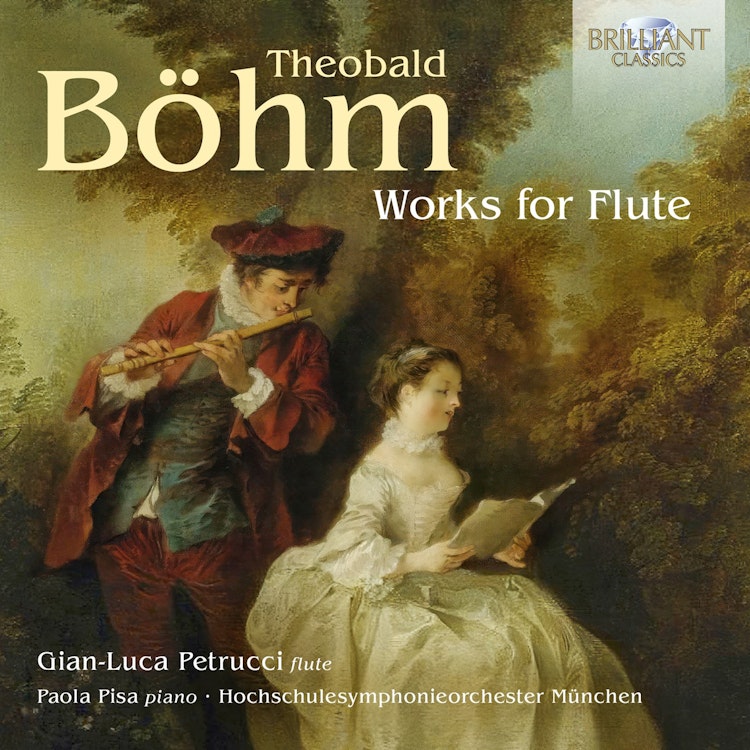
Theobald Böhm's cylindrical flute, introduced in 1847, radically changed the instrument's tradition and opened up new orchestral possibilities, later sanctioned in works by Claude Debussy and Maurice Ravel.
Composer's Artistic Vision
Theobald Böhm created transcriptions of works by great composers like Gluck, Mozart, Beethoven, and Schubert to demonstrate that his 'new flute' could perform challenging pieces without expressive awkwardness.
Composer Biography
Theobald Böhm, a German flautist and composer, was also an ingenious inventor who perfected the construction of the flute.
Composer Biography
Theobald Böhm, the composer and inventor, came from a family of goldsmiths and learned his father's craft while also studying music and flute.
Instruments
In 1847, Theobald Böhm patented a new flute model that is substantially the flute used today, featuring chromatic hole placement, a cylindrical bore, and large holes closed by keys.
Performer Biography
Gian-Luca Petrucci, the flautist on this album, was born in 1951, studied flute with his father, and has been First Flute of several major Italian orchestras.
Composer's Artistic Vision
Theobald Böhm, the inventor of the modern flute, preferred wooden instruments, as his artistic interest was primarily in the quality, rather than quantity, of sound.