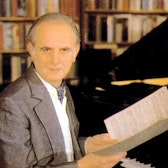
Bohuslav Martinů left the Prague Conservatoire to continue his studies independently, reading, studying scores, attending concerts, and composing daily.
Critical Reception
Bohuslav Martinů's Fantaisies Symphoniques (Symphony No.6) won the New York Music Critics Circle prize in 1956 for the best work performed in New York City in 1955.
Composer Biography
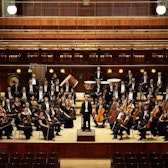
After World War I, Bohuslav Martinů became a second violinist with the Czech Philharmonic, where he learned to master composing for a large orchestra.
Composer Biography
Bohuslav Martinů, a symphonist, spent his first twelve years living in a tower, looking at his village from a bird's-eye perspective.
Composer's Artistic Vision
The memory of his childhood view from a tower influenced Bohuslav Martinů's compositional ideas, focusing on 'space' rather than 'the small interests of people'.
Historical Context
The Double Concerto, H 271, reflects the increasing tension in Europe in 1938, with its composition coinciding with the signing of the Munich Pact.
Compositional Technique
In the Double Concerto, Bohuslav Martinů intensely uses elements of the Baroque Concerto grosso, including solo and ripieno groups, double orchestras, strong rhythm, and counterpoint.
You might also enjoy...
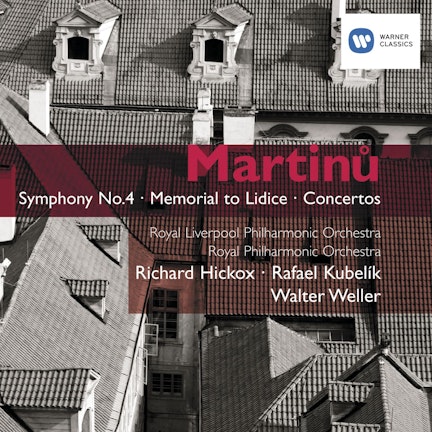
Martinu: Symphony No. 4 & Concertos
Korngold: Orchestral Works, Vol. 4
Martinu/Strawinsky/Honneger
Erkin: Sinfonia Concertante for Piano and Orchestra - Symphony No. 2 - Köcekce-Dance Rhapsody