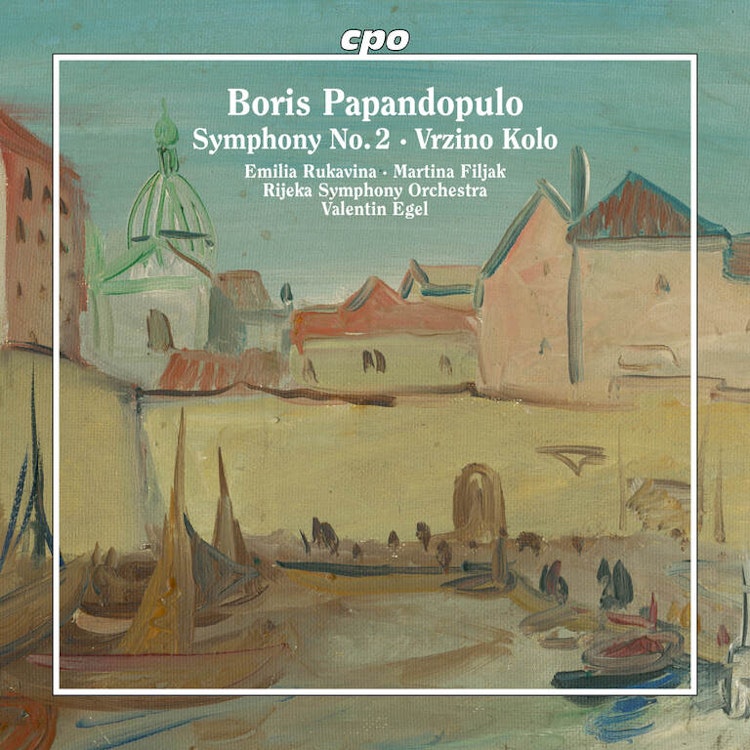
Papandopulo's music often combines Baroque fantasia rhythms with South Slavic folk song melodies, creating a unique synthesis of Oriental-colored elements and folk music scales.
Historical Context
During World War II, Papandopulo converted to Roman Catholicism, likely to facilitate his professional career and public life amidst the racial laws of the Independent State of Croatia.
Composer's Artistic Vision
The Second Symphony's program, with movements like 'The Path into Life' and 'Steps of Freedom,' was designed to reflect the triumph of the People's Army and socialist-realist ideals.
Composition History
Papandopulo's Second Symphony was composed in just two months and premiered in 1946, aiming to align with the socialist-realist guidelines for creative artists established in 1944.
Composer Biography
Boris Papandopulo, a Croatian composer and conductor, faced arrest and persecution during World War II due to his Orthodox Christian faith, despite his father being a Russian citizen.
Compositional Technique
In Vrzino kolo (Witches' Round), Papandopulo uses the octatonic scale, also employed by composers like Nikolai Rimsky-Korsakov and Igor Stravinsky, to evoke fantastic worlds.
Compositional Technique
For his Second Symphony, Papandopulo extensively reused material from earlier works, including a ballet pantomime, a piano piece, a vocalise, and stage music for Goethe's Faust.
You might also enjoy...
STALINGRAD & STAUFFENBERG Zwei Originalsoundtracks von Enjott Schneider
Sinfonia 2022
Modern Yesterdays
Philip Glass for cello
Piazzolla: 4 Seasons of Buenos Aires
Latin American Suite No. 1 for String Quintet
The Composer’s Voice: New Music from Bowling Green, Vol. 10
Echoes of the Land
Gregory Mertl: Afterglow of a Kiss, Empress & Piano Concerto