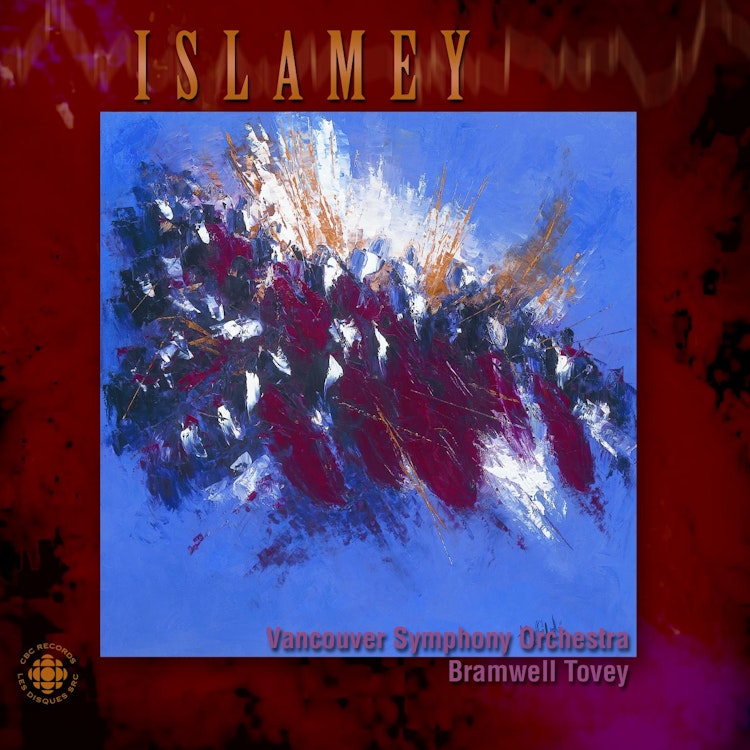
The piano virtuoso Nikolai Rubinstein, who premiered Balakirev's Islamey, admitted that its technical difficulties were so extreme that few pianists would ever be able to play it.
Composer Biography
Mily Balakirev, a charismatic but obstreperous figure, was the catalyst behind 'The Five', a group of late 19th-century Russian composers that included Borodin, Mussorgsky, Rimsky-Korsakov, and Cesar Cui.
Composition History
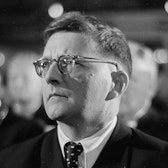
Shostakovich's Ballet Suite No. 1 was assembled in 1949 by his colleague Lev Atovmian from music Shostakovich had written over ten years earlier, in response to the demand for optimistic music under Stalinist terror.
Composition History
Balakirev's Islamey, a virtuoso piano fantasy, was inspired by a Kabardian dance tune and a Tartar melody he heard at Tchaikovsky's home.
Composer's Artistic Vision
The strongly nationalist leanings of 'The Five' (Balakirev, Borodin, Mussorgsky, Rimsky-Korsakov, and Cesar Cui) substantially influenced the course of Russian music, including composers like Shostakovich and Khachaturian.
Historical Context
Khachaturian's ballet Gayane, from which this suite is extracted, was extensively reworked to fit Soviet ideology, retaining little more than the characters' names from its original form.
Composer Biography
Alexander Borodin, a professor of chemistry, was not a professional composer, which limited his time for composition and resulted in a relatively small output.
You might also enjoy...
Invitation to The Dance
Copland: Orchestral Works
Karajan A-Z: Stravinsky - Tchaikovsky
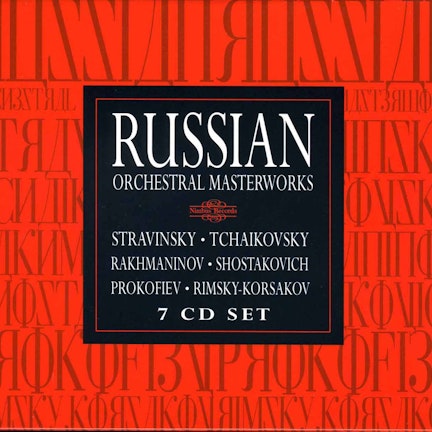
Orchestral Music (Russian) - Tchaikovsky, P.I. / Stravinsky, I. / Rachmaninov, S. / Shostakovich, D. / Prokofiev, S. / Rimsky-Korsakov, N.A.