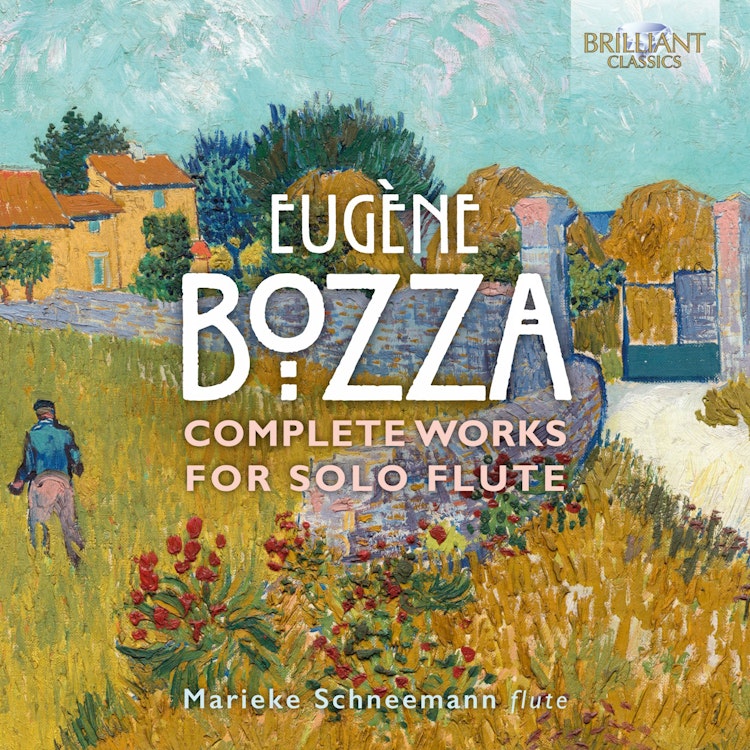
Marieke Schneemann, the flutist on this album, has been the solo flutist for several prominent Dutch orchestras, including the Nederlands Kamer Orkest and the Rotterdams Philharmonisch Orkest.
Composer Biography
Eugène Bozza was awarded the prestigious Prix de Rome in 1934, which required him to spend time at the Villa de Medici where he composed several major works.
Composer's Artistic Vision
Eugène Bozza's music successfully absorbed various artistic influences of the 20th century, including Impressionism, neo-Classicism, jazz, and modernism.
Compositional Technique
Bozza's 10 Studies in Karnatic Modes are experimental, featuring flutter-tonguing, quarter-tones, and the use of Indian modes from the southern Indian subcontinent.
Composer Biography
Eugène Bozza, the composer, was a brilliant student at the Paris Conservatoire, winning first prizes in violin, conducting, and composition.
Compositional Technique
Bozza often borrowed from his own compositions, reworking material from earlier works to create new pieces, as seen in Phorbéia and Interlude.
Compositional Technique
The 14 Études-Arabesques by Bozza incorporate various flute techniques like flutter-tonguing and allude to famous flute passages by composers such as Ravel, Debussy, and Stravinsky.