The 'Geistliches Lied' Op. 30 by Brahms is structured as a double canon, with both soprano and tenor, and alto and bass, having their own canonic themes.
Composer Biography
Brahms discovered Friedrich Hölderlin's 'Song of Destiny' in 1868 during a visit to Albert Dietrich, the court Kapellmeister in Oldenburg, and immediately began sketching the work.
Composer's Artistic Vision
Brahms described 'Warum ist das Licht gegeben dem Mühseligen' as a 'brief treatise on the great question 'Why?'' addressing the question of theodicy.
Compositional Technique
Brahms's 'Song of Destiny' contrasts the carefree lives of the gods with the toilsome existence of humans, using different compositional techniques to interpret the text.
Interpretation
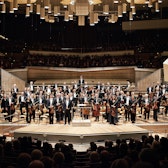
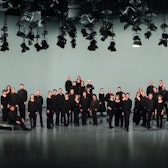
Gijs Leenaars, the conductor, chose a repertoire of choral works with orchestra and unaccompanied a cappella pieces to showcase the versatility of the Berlin Radio Choir.
Composition History
Brahms composed 'Nänie' in memory of the painter Anselm Feuerbach, with whom he had been in friendly contact since 1865, after Feuerbach's death in 1880.
You might also enjoy...
The Times of Day
Abendlieder/Night-Time Songs
Fritz Stüssi, A Swiss Romantic
Universal Prayer
Grainger: Grainger Edition, Vol. 3: Works for Chorus and Orchestra
Christmas Music
Into the Light
Tormis: Curse Upon Iron - Works for male choir
Ligeti: Lux aeterna
Christmas Songs
Ave Maria: Madonna Mystica - Bach, J.S. / Handel, G.F. / Schubert, F. / Bruckner, A. / Brahms, J. / Liszt, F.