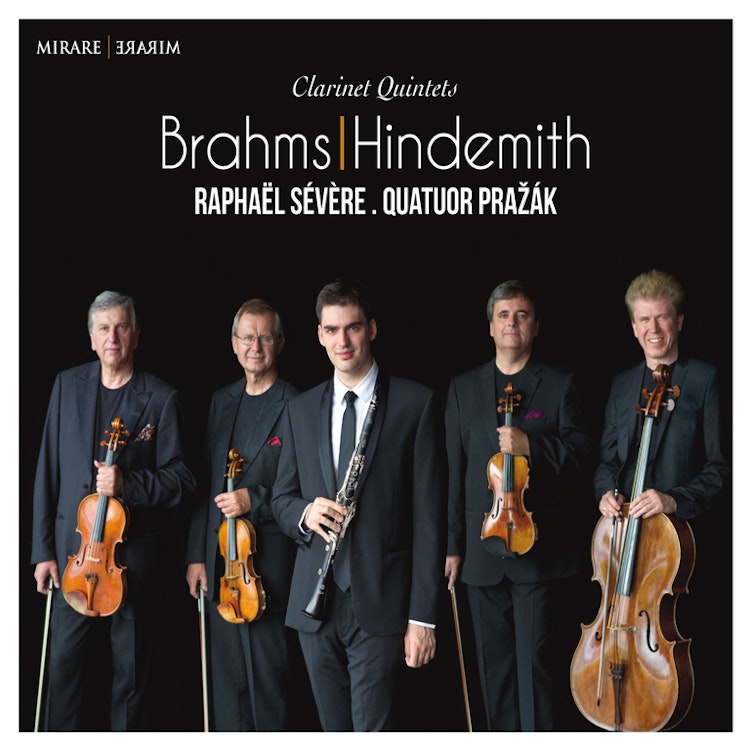
The Pražák Quartet, established in 1972, won the First Prize at the Evian String Quartet Competition in 1978 and has since gained international recognition for its performances of both Central European and contemporary repertoire.
Composer Biography
Paul Hindemith, born in 1895, witnessed the defeat of Germany and the collapse of Austria-Hungary firsthand, having been mobilized into the army at 23 after his father was killed in action.
Compositional Technique
Brahms's Clarinet Quintet Op. 115 incorporates elements from other composers, with variations in the last movement echoing Mozart's Clarinet Quintet and references to Weber's Quintet, alongside 'Gypsy' style reminiscences in the second movement.
Notable Performances
The first public performance of Brahms's Clarinet Quintet was given in Berlin in early December 1891 by the quartet of his old friend, Joseph Joachim, a renowned violinist and conductor.
Performer Biography
Raphaël Sévère, the clarinettist on this album, won the Tokyo Competition at age twelve and the prestigious Young Concerts Artists International Auditions in New York in 2013, receiving eight special prizes in addition to the First Prize.
Compositional Technique
Paul Hindemith's Clarinet Quintet, particularly in its 1954 revision, includes a 'Schneller Ländler' movement assigned to the E-flat clarinet, evoking both Austrian folk tradition and military bands.
Composition History
Johannes Brahms, after considering his work complete in 1890, was inspired to write his Clarinet Trio Op. 114 and Clarinet Quintet Op. 115 after meeting clarinettist Richard Mühlfeld in 1891.
You might also enjoy...
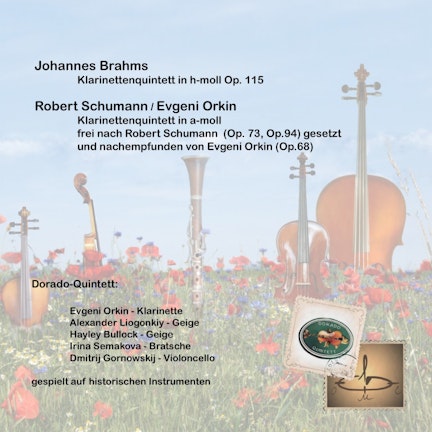
Klarinettenquintette von J. Brahms, Op. 115 und R. Schumann, gesetzt und nachempfunden von E. Orkin zu, Op. 68
In Memoriam I
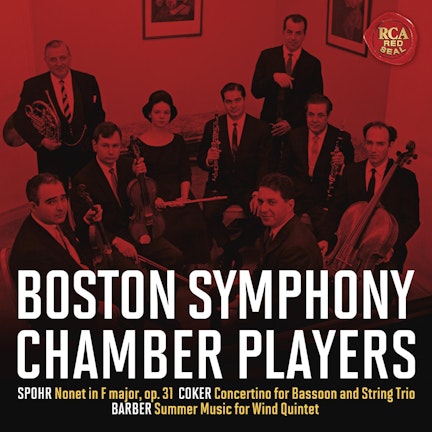
Spohr: Nonet in F Major, Op. 31 - Coker: Concertino for Bassoon and String Trio, Op. 31 - Barber: Summer Music, Op. 31 - Coker: Concertino
Florent Schmitt: Lied et Scherzo, Suite en rocaille, A tour d'anches, Chants alizés