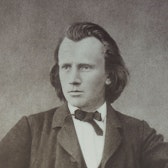
Brahms met Julius Stockhausen, the concert singer who inspired these songs, in 1856, leading to an artistic collaboration and a lifelong friendship.
Compositional Technique
Nearly all the romances in this cycle follow the principle of 'developing variation,' where a thematic idea is continuously modified and takes on new forms.
Composition History
Brahms began composing these romances in the summers of 1861 and 1862 in Hamm, where he also wrote the Handel Variations and important chamber music.
Critical Reception
At the 1862 premiere of the first song, 'Keinen hat es noch gereut,' with Brahms at the piano, the performance received only tepid applause, partly because the program note was too vague.
Cultural Impact
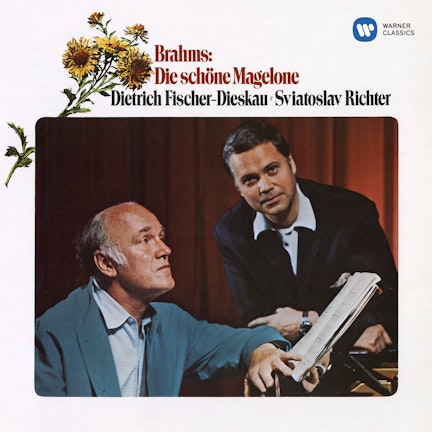
The poems set to music by Brahms were taken from Ludwig Tieck's 1797 retelling of a medieval French tale of courtly love, 'The Wondrous Romance of the Fair Magelone and Count Peter of Provence.'
Composition History
The composition of this song cycle, Brahms's Opus 33, took eight years to complete, with the last two songs finished in May 1869.
Composer's Artistic Vision
Brahms's primary intention for these romances was to create romantic moods, viewing the individual songs as lyrical-dramatic reflections of the poetry.
You might also enjoy...
Mussorgsky: Without Sun, Songs and Dances of Death
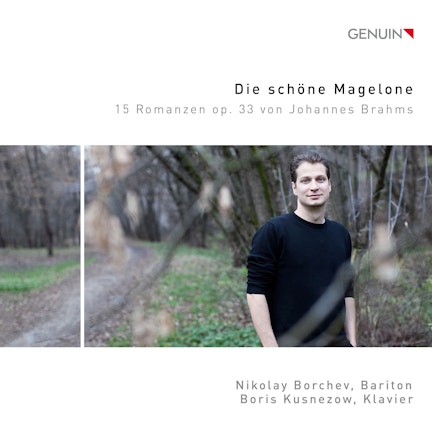
Die schöne Magelone
Schoenberg, R. Strauss & Hessenberg: Lieder
Brahms : Deutsche Volkslieder
Brahms: Deutsche Volkslieder, WoO 33
Brahms: Die schöne Magelone, Op. 33
Brahms: Deutsche Volkslieder
In This Moonlit Night
Copland: Concerto for Clarinet and Strings & Old American Songs