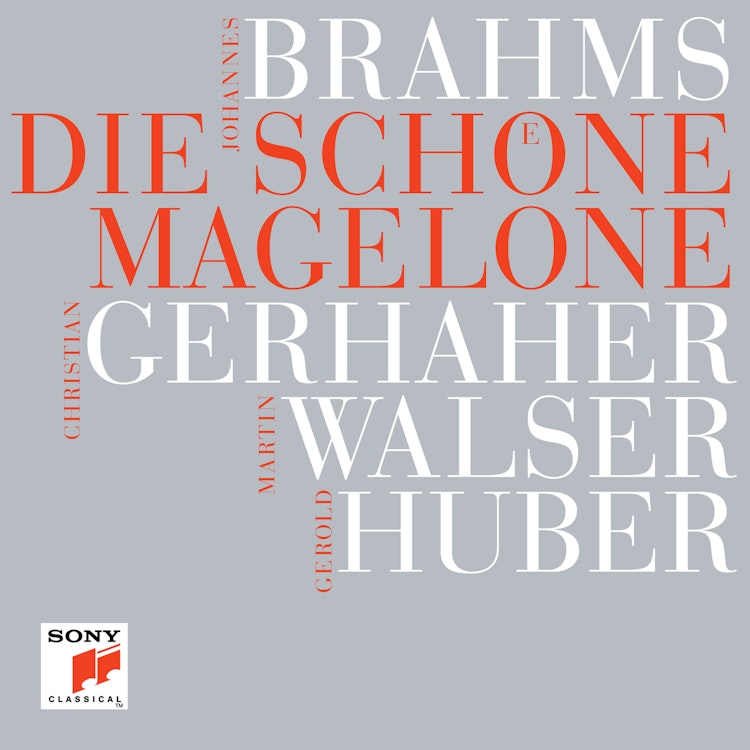
Despite the long period of composition, Brahms's Magelone Romances maintain a consistent style, with no stylistic breaks, appearing as a unified work.
Composer's Artistic Vision
Brahms considered the individual Romances as lyrical-dramatic reflections, aiming to convey romantic moods rather than strictly follow the narrative of the underlying story.
Composer Biography
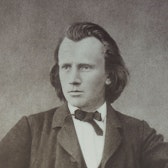
Johannes Brahms, the composer, met Julius Stockhausen, a renowned concert singer, at a music festival in 1856, leading to a lifelong friendship and artistic collaboration.
Composition History
The idea for Brahms's Magelone Romances came from Julius Stockhausen, who encouraged Brahms to set poems from Ludwig Tieck's Magelone story to music.
Interpretation
This recording includes spoken interlude texts by Martin Walser, who condensed Ludwig Tieck's original story to provide necessary context for the songs, a practice Brahms himself eventually suggested.
Critical Reception
At its 1862 premiere in Hamburg, the first song from the cycle, 'Keinen hat es noch gereut,' received only weak applause, partly because its context was unclear to the audience.
Composition History
Brahms composed the 15 Romances from Ludwig Tieck's 'Wundersame Liebesgeschichte der schönen Magelone und des Grafen Peter aus der Provence' over eight years, between 1861 and 1869.
You might also enjoy...
Stravinsky: The Soldier's Tale
Grieg: Peer Gynt (English Version)
Bach: Cantatas - Listening Guide
Lehár: Der Rastelbinder
The Nutcracker - With Narration by Geoffrey Rush
Dieu
John Glover: Lucy (Live)
Raritäten Vol. 2 - Richard Strauss: Enoch Arden: Melodrama for Voice and Piano, Op. 38
Saint-Saëns: Carnival of the Animals (Narrated by Jimmy Fallon)
William Walton's Façade, An Entertainment With Poems By Edith Sitwell