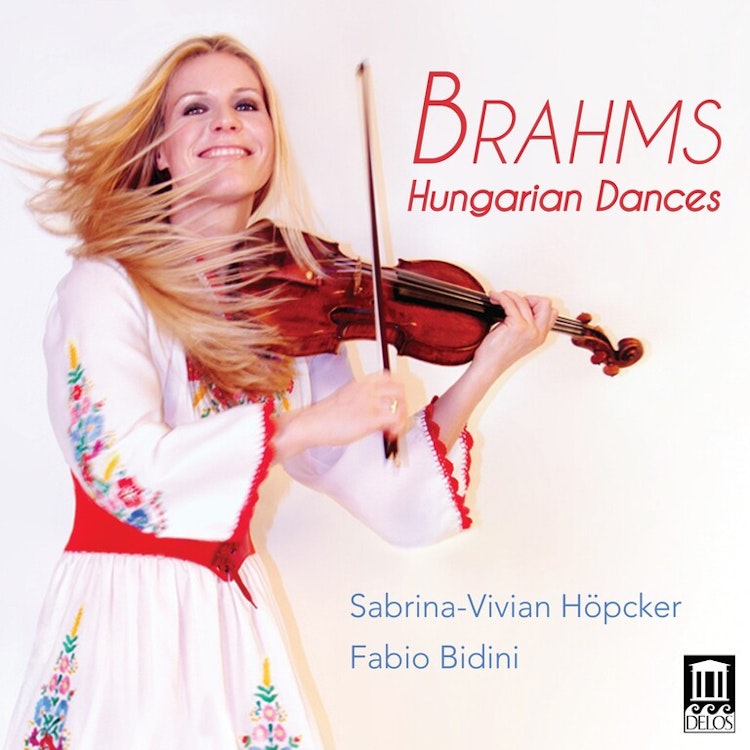
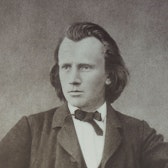
Brahms became familiar with Gypsy melodies during his youth in Hamburg, hearing them played by Hungarian musicians who had fled after the failed revolution of 1848.
Composer's Artistic Vision
Brahms was fascinated by the virtuosic and passionate style of Hungarian Gypsy music, including its unusual harmonies and abrupt changes between slow and fast sections.
Composition History
The violinist Joseph Joachim, a lifelong friend of Brahms, arranged the Hungarian Dances for violin and piano, a version that gained significant importance.
Interpretation
The performers, Sabrina-Vivian Höpcker and Fabio Bidini, believe the violin and piano arrangement of the Hungarian Dances is ideal because it is closer to traditional Hungarian folk music.
Composition History
The German term 'setzen' in the original title of Brahms' Hungarian Dances is ambiguous, meaning either 'composed' or 'arranged,' leading to accusations of plagiarism.
Instruments
The violin is considered the ultimate Gypsy instrument, and Brahms likely first heard many of the themes for his Hungarian Dances played by violinists.
You might also enjoy...
Schubert: Violin Sonata in A Major, Fantasie in C Major and Rondo in B Minor
Campoli - The Decca 78s, Volume 1
Sonatas for Violin and Harpsichord BWV 1014, 1015, 1016
Bazzini: Works for Violin and Piano, Vol. 3
Isolde Menges
Bach: Six Sonatas for Violin & Clavier
Schumann - Schubert - Violin Sonata - Fantasy
Bach, J.S. Violin Sonatas Nos. 1, 2 & 6 / Bach, C.P.E.: Violin Sonata in C Minor
Koch, Sinding, Melartin & Gade: Music for Violin & Piano
Schubert: Violin Sonatas, D. 384, 385 and 408 & Duo Sonata, D. 574
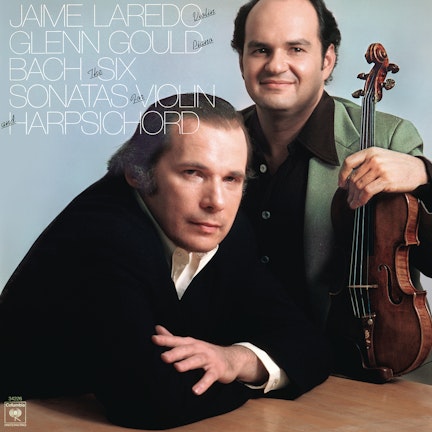
Bach: The Six Sonatas for Violin and Harpsichord, BWV 1014-1019 - Gould Remastered
Bach: The Six Sonatas for Violin and Harpsichord, BWV 1014-1019 - Gould Remastered