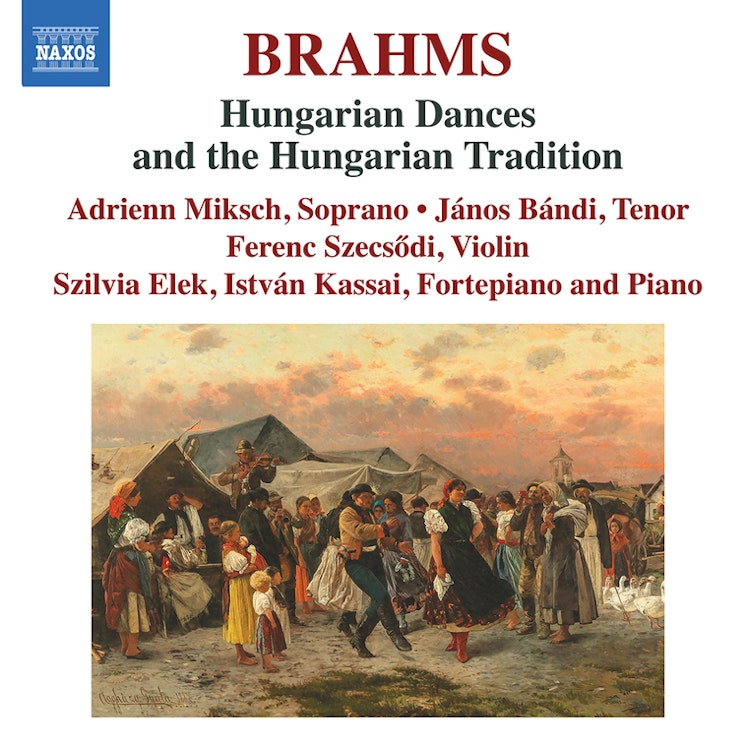
Brahms: Hungarian Dances & the Hungarian Tradition
3/10/2023, 64 Tracks, 2:30:26
Featuring
Adrienn Miksch
János Bándi
Szilvia Elek
István Kassai
Ferenc Szecsődi
Miska Borzó
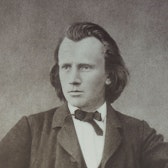
Johannes Brahms
Mór Windt
Anonymous (Traditional)
Ede Reményi
Nándor Mérty
Elemér Szentirmay
Józsi Csillag
Béla Kéler
Miklós Konkoly-Thege
Ferenc Patikárus
Ignác Frank Szabadi
János Travnyik
Ferenc Bunkó
József Szerdahelyi
Ede Bartay
László Zimay
Béni Egressy
Kálmán Simonffy
József Kecskeméti
Ferenc Sárközi
János Nepomuk Svastits
Did you know?
1/7
Recording & Production
This album features recordings on two different instruments: a mid-19th-century fortepiano for the Hungarian traditional sources and a modern Steinway piano for Brahms's Hungarian Dances.
Composer Biography
Brahms toured with Hungarian-born violin virtuoso and composer Ede Reményi, who engaged Brahms as his piano accompanist, introducing him to Hungarian music.
Composer's Artistic Vision
Brahms's Hungarian Dances are described as Hungarian music 'seen through Brahmsian glasses,' blending subjective elements with the sounds and spiritual message of their source material.
Composer Biography
Johannes Brahms became familiar with Hungarian music during the 1840s in Hamburg, especially after 1849, due to the presence of Hungarian refugees after the failed War of Independence.
Compositional Technique
Brahms orchestrated three of his Hungarian Dances (Nos. 1, 3, and 10) himself, while others were orchestrated by various composers, including Antonín Dvořák.
Cultural Impact
Brahms's first series of Hungarian Dances inspired Antonín Dvořák to compose his own Slavonic Dances in 1878.
Composition History
Brahms published two sets of Hungarian Dances for piano four hands: the first (Nos. 1-10) in 1869 and the second (Nos. 11-21) in 1880.