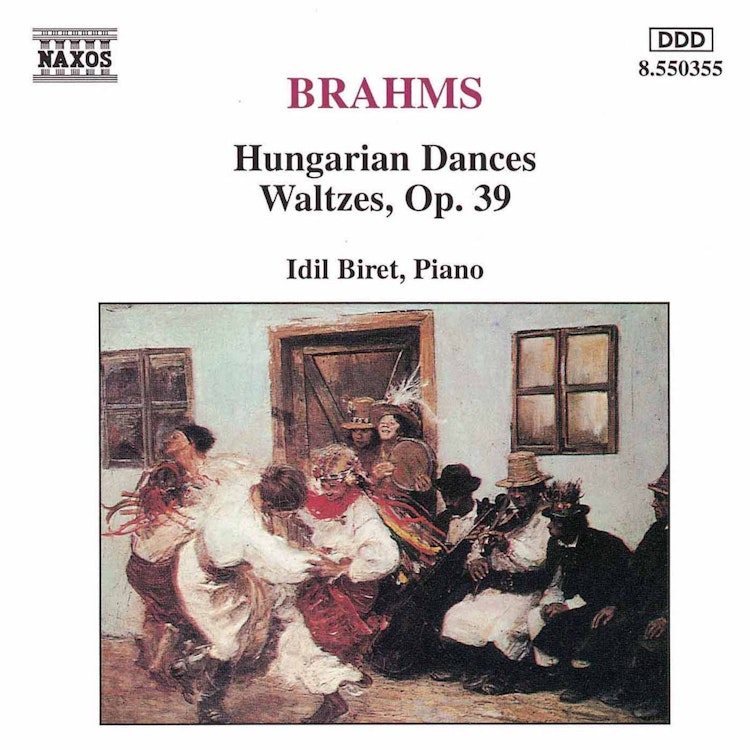
The sixteen Waltzes, Opus 39, were written in Vienna in 1864 and published two years later, dedicated to critic Eduard Hanslick.
Composer's Artistic Vision
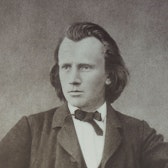
Brahms, championed by critic Eduard Hanslick, became known as a proponent of pure or abstract music, in contrast to Wagner and Liszt who favored music-drama and symphonic poems.
Composition History
Brahms showed an early interest in Hungarian gypsy music, influenced by his acquaintances Reményi and Joseph Joachim, and played gypsy melodies on the piano in the 1850s.
Composer Biography
Johannes Brahms, the composer, first visited Vienna in 1862 and eventually took up permanent residence there in 1869, remaining a citizen for the rest of his life.
Compositional Technique
The Waltzes, Opus 39, are in a simpler and shorter form compared to the slightly more complex Hungarian Dances.
Composition History
The group of ten Hungarian Dances for solo piano was published in 1872, after an earlier, smaller group was rejected by a different publisher.
Performer Biography
Idil Biret, the pianist, began piano lessons at age three and graduated from the Paris Conservatoire with three first prizes when she was fifteen.
You might also enjoy...
The 20th Century Piano Duets Collection
Igor Strawinsky: Le Sacre du Printemps
La nuit... L'amour (Seasons for Fantasy)
Reicha Rediscovered, Vol. 2
Saint-Saëns: Music for Piano Duo & Duet, Vol. 1
Saint-Saëns: Music for Piano Duo and Duet, Vol. 2
Odeon: Brazilian Dances by Ernesto Nazareth
Busoni: Works for 2 Pianos
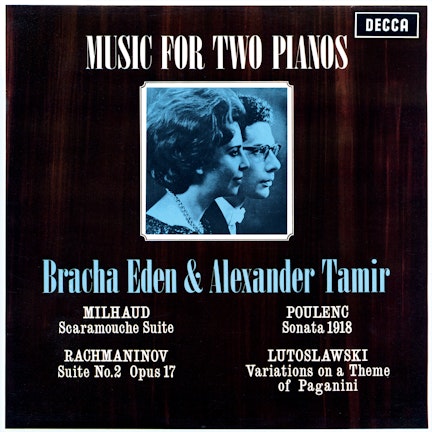
Music for Two Pianos - Milhaud; Rachmaninov; Poulenc; Lutoslawski