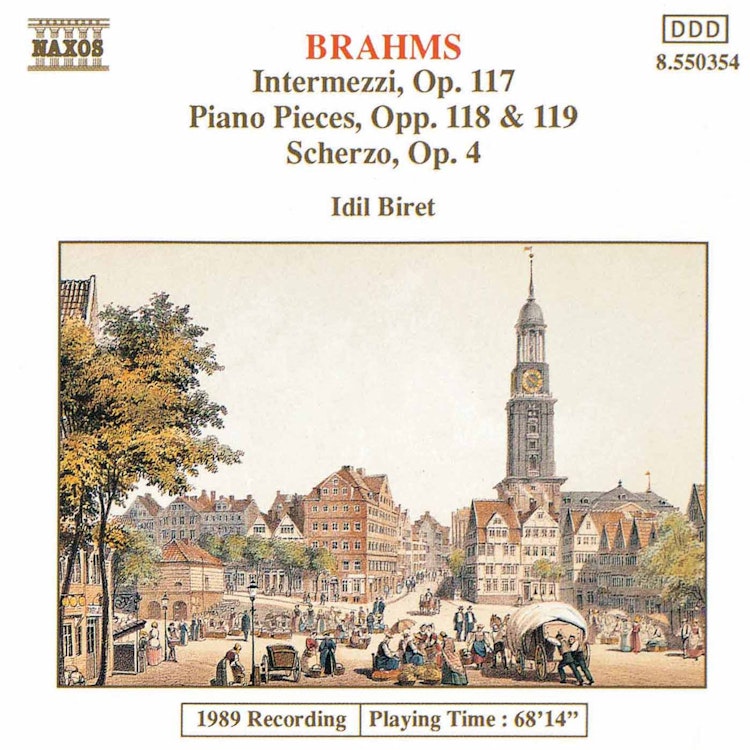
Brahms: Intermezzi, Op. 117 / Piano Pieces, Opp. 118-119
12/1/1991, 14 Tracks, 1:08:14
Featuring
Idil Biret
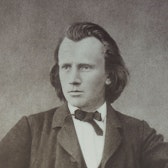
Johannes Brahms
Did you know?
1/7
Composer's Artistic Vision
Brahms championed 'pure or abstract music,' contrasting with Richard Wagner and Franz Liszt, who advocated for music-drama and symphonic poems, respectively.
Composer Biography
As a teenager, Brahms earned money for his family by playing piano in establishments of 'doubtful reputation' in Hamburg's St. Pauli district.
Composition History
The first Intermezzo, Op. 117, features a subtitle with a quotation from a Scottish folk-song translated by Herder: 'Sleep softly, my child, sleep softly and beautifully! I am very sorry to see you weep.'
Composition History
The Intermezzi, Op. 117, and Piano Pieces, Opp. 118 & 119, are among the last compositions Brahms wrote for piano, primarily dating from 1892.
Composer Biography
Johannes Brahms, the composer, began his musical training on violin and cello with his father, a double-bass player, before focusing on piano.
Composer Biography
Robert Schumann, a prominent composer and critic, hailed Brahms as the long-awaited successor to Beethoven after hearing him play in 1853.
Performer Biography
Idil Biret, the pianist on this recording, began piano lessons at age three and graduated from the Paris Conservatoire with three first prizes at fifteen.