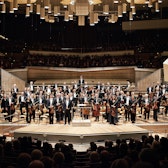
The idea for this album was to give Brahms' Clarinet Sonatas a 'larger platform' and present them in a new light, moving them from chamber music to a symphonic dimension.
Performer Biography
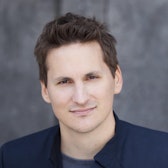
Daniel Ottensamer, the clarinet soloist, and Stephan Koncz, the conductor and arranger, have been making music together for over twenty years, including in the Vienna Philharmonic and chamber ensembles.
Interpretation
Stephan Koncz's orchestration of Brahms' sonatas involved 'reverse engineering' the piano part to extract an orchestral score, sometimes adding new notes or invented material while maintaining the clarinet line.
Composer Biography
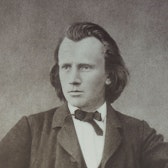
Brahms turned to the clarinet for several late works thanks to Richard Mühlfeld, an extraordinary musician who largely taught himself the clarinet after starting as a violinist.
Composition History
Brahms wrote the two clarinet sonatas despite intending to stop composing, partly due to his admiration for Richard Mühlfeld, to whom he dedicated the works.
Compositional Technique
Brahms often created alternative versions of his works, such as the Haydn Variations for orchestra and piano, and the Clarinet Sonatas for viola or violin, showing his flexibility with form.
Composition History
Walter Rabl's Quartet for Piano, Clarinet, Violin, and Cello won first prize in an 1896 composition competition, largely due to Johannes Brahms, who was an honorary president and jury member.
You might also enjoy...
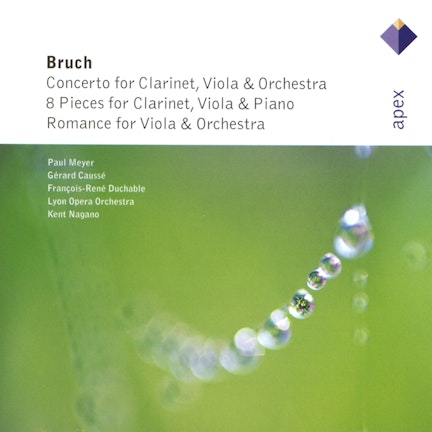
Bruch : Works for Clarinet & Viola
The Voice of the Clarinet
Brahms: Clarinet Quintet, Op. 115: Baermann: Adagio for Clarinet and String Quintet
Flight Of The Bumble Bee
Mischa Maisky in Verbier
Deutsche Klarinette. Brahms, Mendelssohn, Beethoven, Weber...