Brahms's decision to continue composing after intending to retire was due to a chance encounter with clarinettist Richard Mühlfeld, whose playing reignited his inspiration.
Compositional Technique
The Intermezzo in B flat minor, Op. 117/2, is a favorite of form analysts because Brahms plays with multiple parameters, including shifting metrical accents and integrating sonata form into a ternary design while avoiding expected keys.
Composer's Artistic Vision
Brahms designed his 'late oeuvre' to be a definitive final statement, whose character, texture, and mood would not allow anything to follow.
Composition History
Brahms deliberately destroyed many of his youthful works, wallpapering a room with scores before tearing them down and burning them, to prevent them from overshadowing his mature output.
Composer Biography
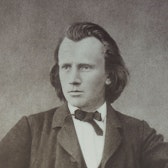
At 59, Johannes Brahms felt he had said all he needed to say and intended to dedicate his remaining years to destroying his unfinished works.
Composer's Artistic Vision
Brahms's late piano pieces, particularly the Intermezzo in E flat minor, Op. 118/6, transform the modest lyrical piano piece into a meditation on transience, reflecting his thoughts on farewell and death, even incorporating the Dies irae motif.
Compositional Technique
Brahms's late piano style is characterized by extreme economy, using abstract components like a falling diminished seventh as a head motif or deriving themes solely from a descending scale.
You might also enjoy...
Brahms: 10 Intermezzi for Piano - Gould Remastered