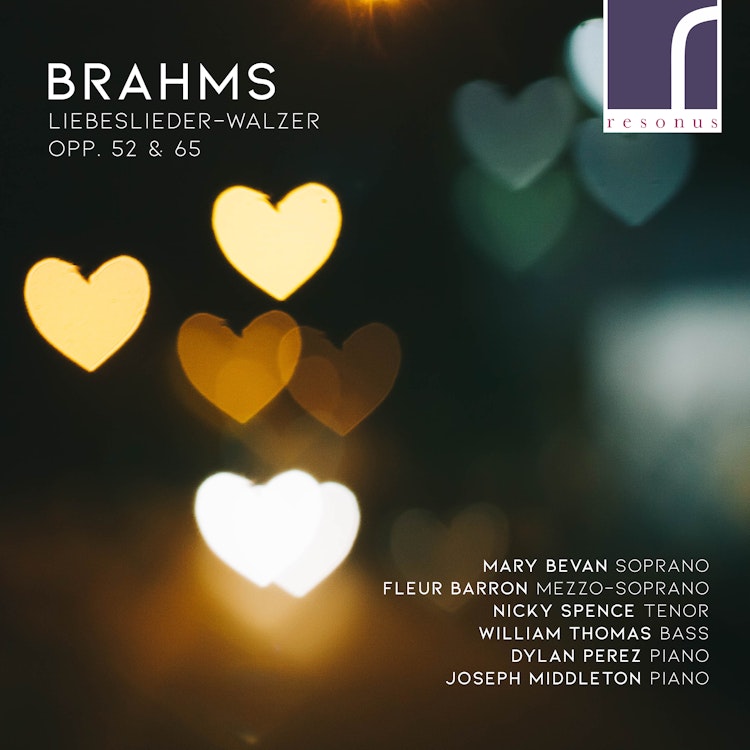
The Liebeslieder Walzer are all waltzes of one sort or another, a dance form in which Brahms had already excelled with his Sixteen Waltzes Op. 39.
Compositional Technique
The final song of the Neue Liebeslieder Walzer, 'Zum Schluss' by Johann Wolfgang von Goethe, features a ground bass whose first six notes are a self-borrowing from Brahms's Alto Rhapsody.
Historical Context
Hausmusik, or music written primarily for domestic purposes, experienced a golden age during the Romantic era, with composers creating works for popular instrumental combinations and vocal music.
Critical Reception
The Liebeslieder Walzer, Op. 52, were a considerable financial success for Brahms, prompting him to create a second set, the Neue Liebeslieder Walzer, Op. 65.
Composition History
Brahms composed the Liebeslieder Walzer, Op. 52, during a productive holiday in Baden-Baden in the summer of 1869, where he also composed the Alto Rhapsody.
Composer's Artistic Vision
For the Liebeslieder texts, Brahms chose poems by Georg Friedrich Daumer, one of his favorite poets, all taken from Daumer's anthology Polydora: ein weltpoesches Liederbuch.
You might also enjoy...
Brahms: The Complete Songs, Vol. 4
Brahms: Lieder
Brahms
Brahms: Die Schöne Magelone
Brahms: Die schöne Magelone op. 33
Brahms: 2 Gesänge, Op. 91
Brahms: 4 Gesänge für Frauenchor, 2 Hörner und Harfe, op. 17
Brahms: Lieder
Brahms: 4 Ernste Gesänge, Op. 121: I. Denn es gehet dem Menschen wie dem Vieh