Brahms regarded his early organ preludes and fugues as "novice projects" not worthy of publication, and they were only discovered and published in 1927, thirty years after his death.
Compositional Technique
Brahms's contrapuntal ingenuity is evident in his Fugue in A flat minor, where the main subject is answered by its own inversion.
Composer Biography
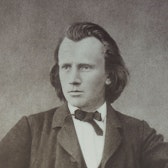
Johannes Brahms's final compositions were a set of chorale preludes for organ, published posthumously in 1902, despite organ music not being what he is most known for.
Composition History
Brahms returned to organ composition towards the end of his life, specifically to write the Eleven Chorale Preludes, just before the impending death of his close friend Clara Schumann.
Composition History
In the 1850s, a young Brahms aspired to become an "organ virtuoso" and began composing for the instrument, though he found it difficult to master.
Composer's Artistic Vision
Brahms was an avid student of pre-19th-century music and often chose archaic musical forms, like the prelude and fugue, for his own compositions.
Performer Biography
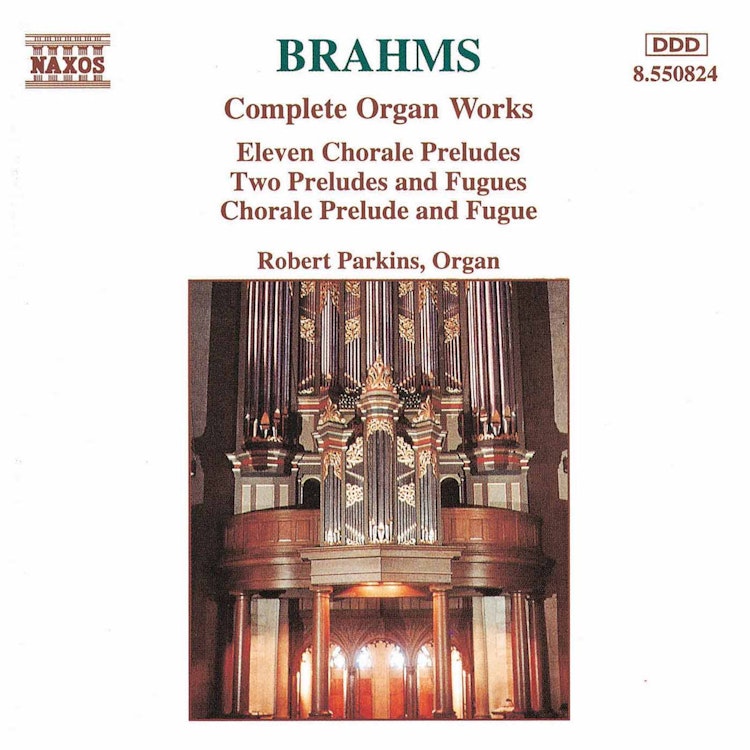
Robert Parkins, the American organist on this recording, studied with notable figures like Gerre Hancock and Anton Heiller, and specializes in early Iberian keyboard literature and German Romantic organ music.