Johannes Brahms's music often conceals "countless moments of human experience beneath its surface," with poetry serving as a unifying thread connecting his musical worlds.
Critical Reception
The Sonata in F Minor, Op. 5, composed by Johannes Brahms at age 20, was enthusiastically received by contemporary critics, with Louis Köhler describing it as "one of the most impressive musical works of modern times."
Album & Artwork
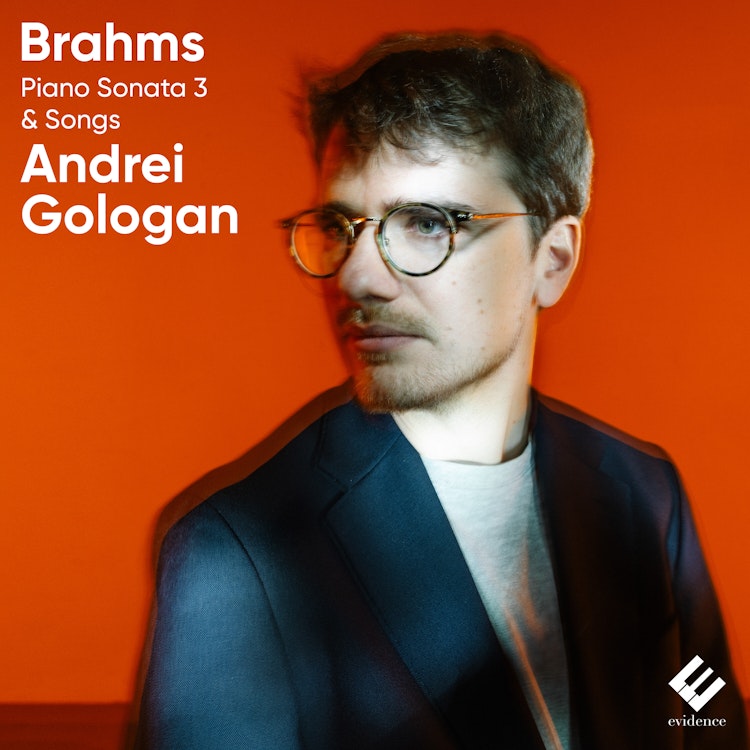
The album title, "Brahmsnebel," or 'Brahmsian fog,' was coined by critic Wilhelm Tappert and refers to the perceived opaqueness and density of Johannes Brahms's compositional style.
Composition History
Max Reger, a composer, arranged ten of Johannes Brahms's Lieder for solo piano, insisting on "utmost fidelity to the originals" and publishing four volumes of these transcriptions between 1906 and 1912.
Composer Biography
Johannes Brahms admired the Symbolist painter Max Klinger, who created the graphic cycle Brahms-Phantasie as a visual interpretation of Brahms's works, two of which are featured on this album.
Composition History
Johannes Brahms added verses by C.O. Sternau to the second movement of his Piano Sonata No. 3, Op. 5, remarking that they were "perhaps necessary [...] for the understanding of the Andante."
Recording & Production
This album was recorded from December 19 to 21, 2024, at the Kammermusiksaal of Deutschlandfunk, Cologne, Germany, in a coproduction with Deutschlandfunk Kultur.
You might also enjoy...
Pejačević: Complete Piano Works
Gottschalk: A Night in the Tropics – Solo Piano Music
Richard Strauss: Klavierwerke
Goldberg Var.
Solitudes: Chopin - Debussy - Satie - Brahms - Beethoven
Lekeu: Complete Piano Works
Schumann: Fantasy in C Major / Liszt: Beethoven and Schumann Transcriptions