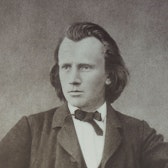
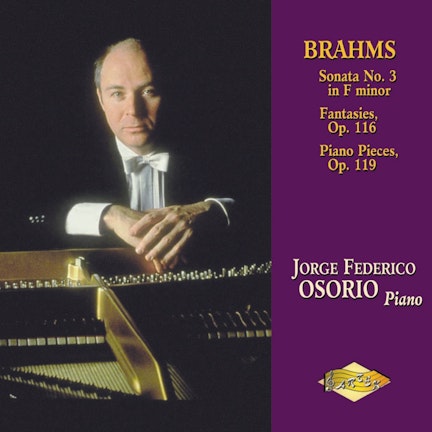
Brahms's human story was linked to Robert and Clara Schumann since autumn 1853, and his late works, including Op. 116-119, were a musical offering to Clara Schumann.
Composition History
Brahms's Piano Sonata No. 3, Op. 5, was written when he was 20 years old, during a journey that led to his pivotal encounter with the Schumann family.
Composition History
The late Klavierstücke Op. 116-119, published in 1892/93, were composed after Brahms experienced a resurgence of creative energy inspired by listening to clarinettist Richard Mühlfeld.
Composer Biography
Brahms's early journey in 1853, intended as a small concert tour, ended with him acclaimed as a 'genius' and his first printed works in his luggage.
Compositional Technique
Brahms's F-Minor Sonata Op. 5 features a five-movement structure with an extended Scherzo at its center, creating an ambiguous 'bridge form'.
Composer's Artistic Vision
Brahms's late works, including the 7 Fantasien Op. 116, were described by his friend and critic Eduard Hanslick as 'a breviary of pessimism'.
Compositional Technique
The opening of Brahms's F-Minor Sonata Op. 5 uses a small descending-third motif that generates upward leaping intervals and progressive modulations, a technique Arnold Schoenberg later called 'developing variation'.