In his Piano Trio No. 3 in C minor, Brahms experimented boldly with rhythm, constructing large parts of the third movement with seven-bar phrases and incorporating 5/4 time.
Composer's Artistic Vision
Johannes Brahms, though often regarded as a symphonic composer, applied the same stylistic features and imposing scale to his numerous chamber works.
Composition History
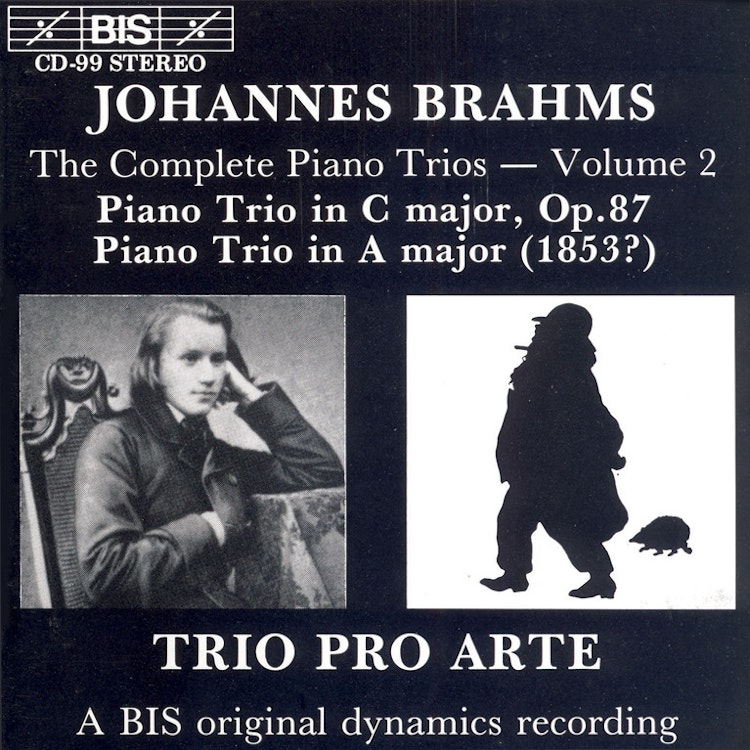
The authenticity of Brahms's A major Piano Trio was long disputed, but most experts now agree it is genuine, likely composed in 1853.
Performer Biography
Elisabeth Westenholz, the pianist of Trio Pro Arte, achieved the best final examination score in the history of the Royal Danish Academy of Music.
Compositional Technique
Brahms was exceptionally skilled at extracting a rich sound from the piano, violin, and cello trio, not just through meaty piano parts but also by instinctively understanding the registers where the violin and cello produce their richest tone.
Composition History
Brahms's B major Piano Trio exists in two versions: an original composed when he was 21, and a revised version he made 37 years later, which is now the most frequently performed.
Composition History
The manuscript for Brahms's A major Piano Trio was discovered in 1924 by German musicologist Ernst Bücken, but its title page was missing, leading to doubts about its composer.
You might also enjoy...
David: Piano Trios Nos. 2 and 3
Tchaikovsky: Piano Trio, Op. 50
Tchaikovsky/Rachmaninov: Piano Trios
Zanella: Piano Trios
David: Piano Trios Nos. 2 and 3
Trio Animæ: Complete Studio Recordings, Vol. 1
Tchaikovsky : Piano Trio
Tchaikovsky/Rachmaninov: Piano Trios
Tchaikovsky: Piano Trio
Brahms: Piano Trios Nos.1 & 2
Sabaneev: Piano Trios
Johannes Brahms: Piano Trio No. 1 in B major, Op. 8 (revised version, 1889)