Brahms expanded the traditional sonata form in his Third Sonata by adding an Intermezzo movement, which serves as a 'reminiscence' or 'recovery phase'.
Compositional Technique
Robert Schumann, a contemporary composer and critic, recognized Brahms's early piano works as 'more like veiled symphonies' due to their orchestral character.
Composition History
Brahms's Variations, Op. 9, on a Theme by Schumann, are included on this album because of their personal nature, proximity to Robert Schumann, and dedication to Clara Schumann.
Performer Biography
Gabriele Carcano, the pianist on this recording, is a recipient of a 2010 Borletti-Buitoni Trust Fellowship Award and has performed internationally as a recitalist, soloist, and chamber musician.
Interpretation
Pianist Gabriele Carcano views the opening of Brahms's Third Sonata as a 'portal' through which Brahms expands his range and explores new tonalities.
Composer Biography
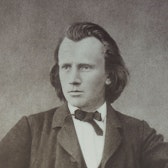
Johannes Brahms, a young composer, presented three piano sonatas (Op. 1, Op. 2, and Op. 5), which were also his last; he never wrote another piano sonata.
Composer Biography
The Scherzo, Op. 4, is Brahms's earliest surviving composition, written when he was eighteen, and its key of E-flat minor forms a parallel to his last piano pieces over forty years later.
You might also enjoy...
Brahms: Haydn Variations, Op. 56b, Waltzes, Op. 39 & Sonata in F Minor, Op. 34b
The Young Brahms
Brahms: Early Piano Works, Vol. 1
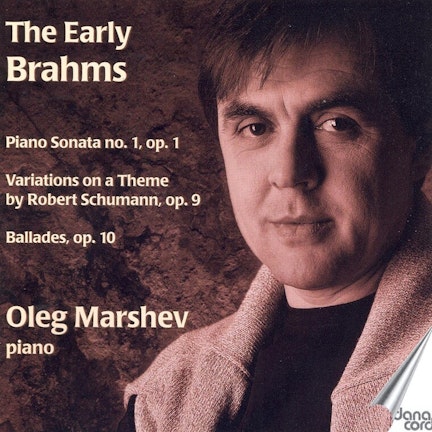
The Early Brahms
Brahms: Sonata for 2 Pianos and the Haydn Variatons
Brahms: Sonata for Two Pianos; Variations on a Theme by Haydn