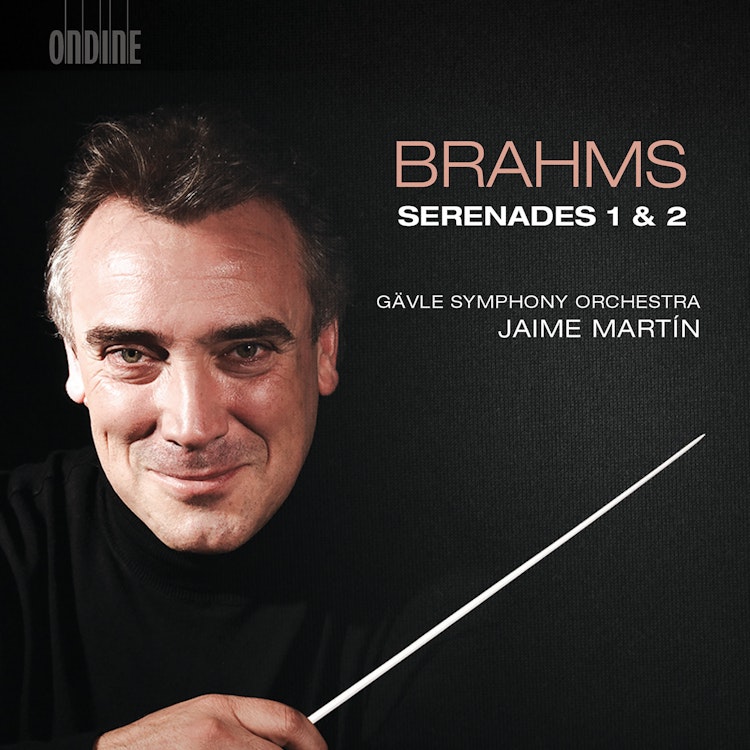
This album was recorded in two sessions in 2015 at the Gävle Konserthuset (Gävle Concert Hall) in Sweden, with Serenade 1 recorded in May and Serenade 2 in October.
Composer's Artistic Vision
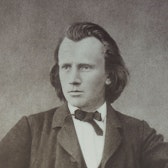
Brahms was inspired by musical forms and ideals from the past, including Bach's counterpoint, Haydn's symphonies, Mozart's serenades, and Schubert's 'spirit', aiming to revive old forms with a modern spirit.
Performer Biography
Jaime Martín, the conductor of this recording, transitioned to conducting after a prominent career as a flautist and holds several artistic director and chief conductor positions.
Compositional Technique
Brahms's Serenade No. 2 notably omits violins, instead deploying violas as the principal part, contributing to a darker overall sound.
Critical Reception
Despite Brahms's own affection for his Serenade No. 2, it received mixed reviews from contemporaries, with some critics finding its unusual instrumentation and dark sound 'dull' or 'shadowy'.
Composition History
Brahms's Serenade No. 1 underwent several revisions before its publication in late 1860, with an earlier, now lost, version performed in Hamburg in 1859.
You might also enjoy...
Brahms: Serenades, Opp. 16 & 11 (Live)
Novak: Serenade in F Major / Serenade in D Major, Op. 36
Brahms: Sérénades
Brahms: Serenades Nos. 1 & 2
Brahms: Serenade No. 1 in D Major, Op. 11
Brahms: Serenade No. 2 in A Major, Op. 16 (Remastered)
Novak: Serenade in F Major / Serenade in D Major, Op. 36