The opening theme for the cello in the G major Quintet, Op. 111, is a demanding test for the player, requiring control and projection against a powerful backdrop of oscillating chords.
Compositional Technique
Both of Brahms's String Quintets follow Mozart's example by adding a second viola to the quartet ensemble, rather than a second cello as Schubert did.
Composition History
Brahms's String Quintet No. 1 in F major, Op. 88, was composed in 1882 in Bad Ischl, a quiet rural resort in Upper Austria.
Composer's Artistic Vision
Brahms maintained a Classical orientation in his music, setting him apart from the trends of Liszt's symphonic poems and Wagnerian opera.
Composer Biography
Brahms's flexibility in rhythm and varied accentuation in his instrumental music may stem from his studies of Palestrina's un-barred imitative polyphony.
Compositional Technique
The finale of Brahms's F major Quintet, Op. 88, features a fugal subject with headlong rhythmic energy, reminiscent of Beethoven's third 'Razumovsky' String Quartet, Op. 59 No. 3.
Compositional Technique
The second movement of the F major Quintet, Op. 88, combines characteristics of two movements through alternation, similar to his Second Violin Sonata in A, Op. 100.
You might also enjoy...
Brahms: String Quintets
Brahms: String Quintets Nos. 1 & 2
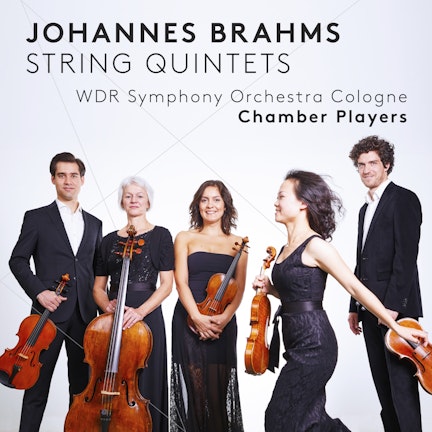
Brahms: String Quintets
Dvořák: String Quintet & String Sextet
Brahms: String Quintets
Brahms: String Quintets Nos. 1 and 2
Brahms: Klarinettenquintett, Op.115 & Streichquintett Nr. 2, Op.111
Schönberg: Verklärte Nacht - Dvorak: Sextet for Strings