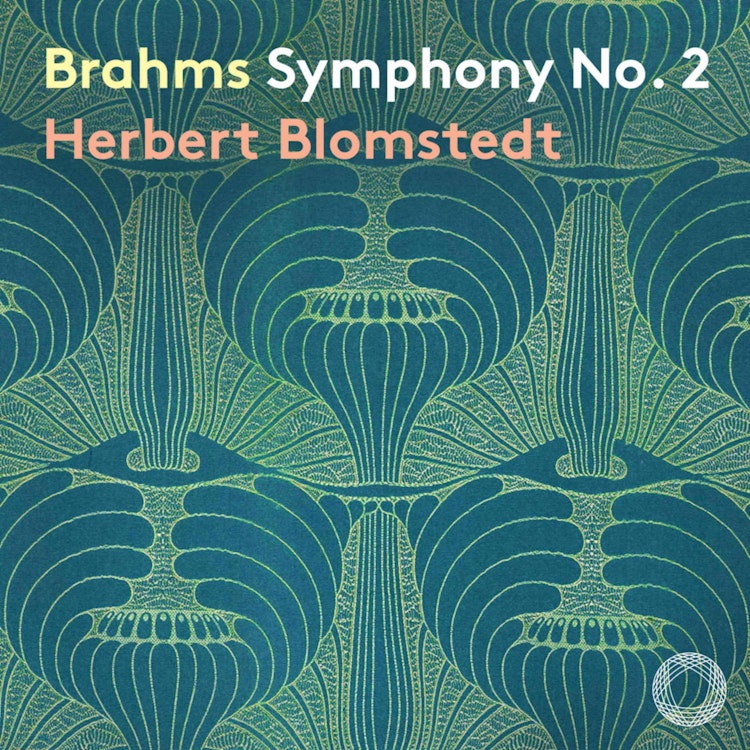
Brahms: Symphony No. 2 & Academic Festival Overture (Live)
4/23/2021, 5 Tracks, 54:58
BBC Music Magazine Monthly Choice
Featuring
Herbert Blomstedt
Gewandhausorchester Leipzig
Johannes Brahms
Did you know?
1/7
Critical Reception
Brahms's Second Symphony was unanimously welcomed by critics, performers, and audiences at its premiere on December 30, 1877, in Vienna.
Composition History
Brahms composed the Academic Festival Overture as a musical thank you for receiving an honorary doctorate from the University of Breslau in 1879.
Compositional Technique
Brahms developed the principle of an ever-present motivic cell, a rotating minor-second motive, which generates the organic growth of the entire Second Symphony.
Composition History
Brahms composed his Second Symphony in just a few weeks during the summer and autumn of 1877, a stark contrast to the nearly fifteen years it took to compose his First Symphony.
Recording & Production
This album was recorded live at the Gewandhaus, Leipzig, in October 2019, featuring the Gewandhausorchester conducted by Herbert Blomstedt.
Compositional Technique
The Academic Festival Overture incorporates four German student songs, including 'Gaudeamus igitur,' which Brahms wove into the composition.
Composer's Artistic Vision
Despite its outwardly cheerful and idyllic tone, Brahms referred to his Second Symphony as a 'new lovely monster' and mentioned the 'necessary shadow over the cheerful symphony,' suggesting a hidden melancholy.
You might also enjoy...
Brahms: Symphony No. 4 & Tragic Ouverture
Brahms: Symphony No. 4 in E Minor, Op. 98 & Academic Festival Overture, Op. 80
Brahms: Symphony No. 4 / Academic Festival Overture
Brahms: Symphony No.2 In D Major, Op. 73
Vaughan Williams: Symphony No. 7 "Sinfonia antartica" & Overture from The Wasps
Brahms: Symphony No. 4 / Academic Festival Overture