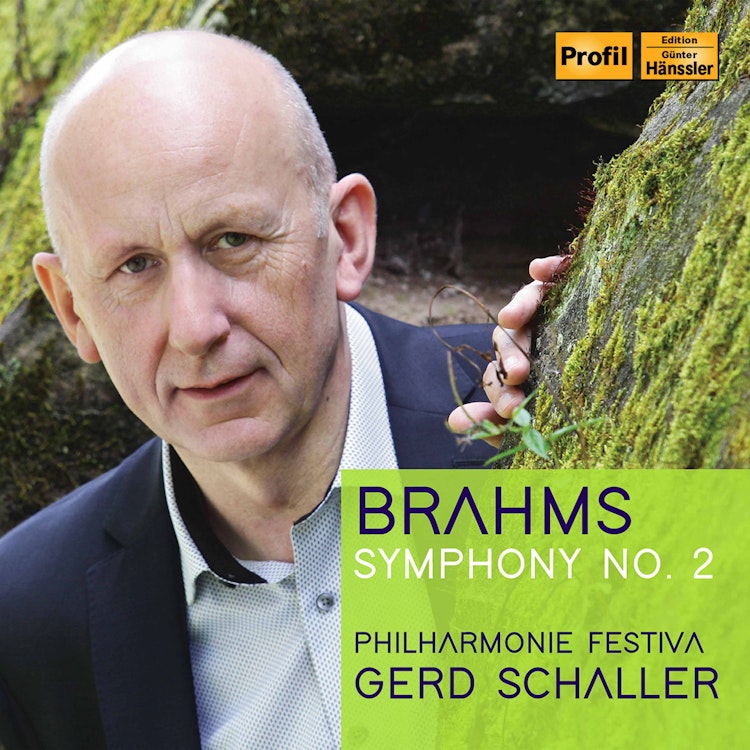
Johannes Brahms' Second Symphony was composed relatively quickly in 1877 during a carefree holiday in Pörtschach on the Wörthersee, unlike his First Symphony which took about twenty years.
Recording & Production
This CD was recorded in the historic Max Littmann Hall of the Regentenbau in Bad Kissingen, inaugurated in 1913, which is considered one of the best concert venues globally due to its ideal dimensions and cherrywood panelling.
Historical Context
The first half of the 19th century saw significant developments in instrument building, including modifications to string instruments for a more powerful sound, remodelled woodwinds for better fluency, and valves on brass instruments for chromatic runs.
Critical Reception
The premiere of Brahms' Second Symphony in December 1877 with the Vienna Philharmonic Orchestra was a success, with the third movement even having to be repeated, though a year later in Leipzig, the audience's reaction was more restrained.
Performer Biography
Gerd Schaller, the conductor, founded the Philharmonie Festiva in 2008, an orchestra composed of high-calibre musicians from leading German ensembles, to pursue his ambitious projects and rediscover forgotten works.
Composer's Artistic Vision
Brahms himself referred to the Wörthersee lake as 'virgin soil' where 'melodies simply fly along,' reflecting the cheerful character of his Second Symphony.
Interpretation
This recording by Gerd Schaller and Philharmonie Festiva uses a smaller string section, reflecting Brahms' preference for orchestras where strings did not overpower woodwinds, resulting in a more transparent sound.
You might also enjoy...
Symphonien Nr. 3&4
Brahms: The Four Symphonies (Live)
Brahms: Symphony No. 3
Brahms: The 4 Symphonies
Brahms: Symphony No. 3 in F Major, Op. 90: III. Poco allegretto