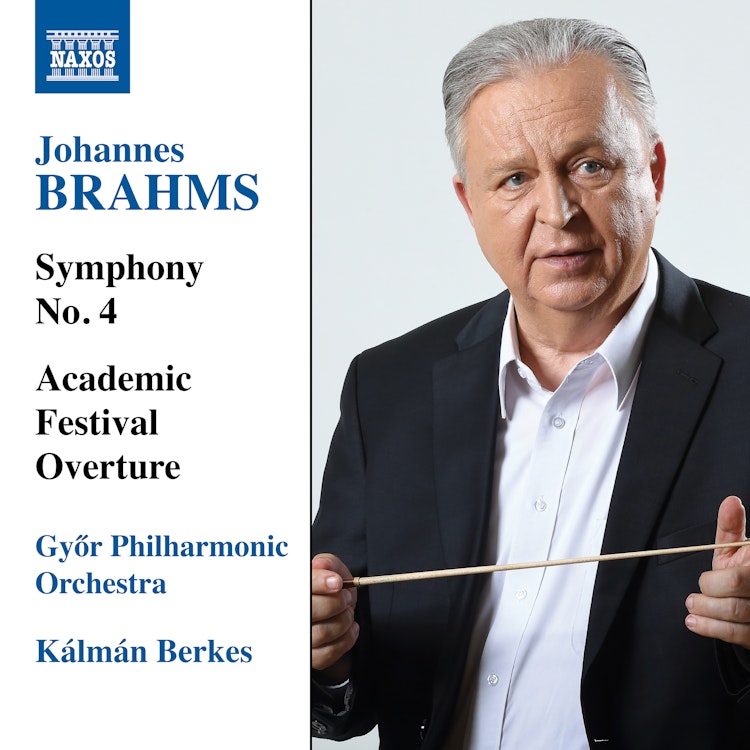
Brahms: Symphony No. 4 & Academic Festival Overture
8/10/2018, 5 Tracks, 50:20
Featuring
Kálmán Berkes
Győri Filharmonikus Zenekar
Johannes Brahms
Did you know?
1/7
Compositional Technique
The finale of Brahms's Fourth Symphony is a chaconne, inspired by J.S. Bach's Cantata No. 150, and transforms Bach's theme with new rhythm, melody, and harmony.
Composer's Artistic Vision
Brahms believed that 'more than four symphonies are not really possible for the modern musician who would give each a characteristic content, after that one is forced to repeat oneself.'
Compositional Technique
The Academic Festival Overture strings together student songs, one of which had words critical of university authorities, but reveals intricate compositional techniques upon closer listening.
Performer Biography
Kálmán Berkes, the conductor, started his professional career at age 16, playing Bartók's Contrasts, one of the most complicated works in the clarinet repertoire.
Composition History
Brahms wrote his Fourth Symphony during the summers of 1884 and 1885 in the Styrian village of Mürzzuschlag, following the success of his Third Symphony.
Composition History
Brahms's Academic Festival Overture was his artistic response to an honorary doctorate awarded by the University of Breslau in March 1879.
Recording & Production
This recording, featuring Brahms's Symphony No. 4 and Academic Festival Overture, celebrates the 50th anniversary of the Győr Philharmonic Orchestra.