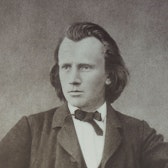
Brahms's fascination with Hungarian music began when he played as a young bar pianist in Hamburg and was further fueled by his friendship with Hungarian violinist Ede Reményi.
Historical Context
Brahms became entangled in a conflict between conservative 'Brahmsian' and progressive 'Wagnerian' schools in German music, despite his own dislike for such divisions.
Composition History
Brahms published two volumes of Hungarian Dances for piano duet, incorporating existing Hungarian tunes, without opus numbers and credited himself as adapter/arranger rather than composer.
Critical Reception
The premiere of Brahms's Third Symphony in Vienna in 1883 caused a partisan battle, with Wagner devotees whistling and jeering, countered by Brahms supporters' applause.
Performer Biography
Iván Fischer, the founder and Music Director of the Budapest Festival Orchestra, has developed unique concert types, including 'cocoa-concerts' for children and 'surprise' concerts with unannounced programs.
Compositional Technique
Brahms's Fourth Symphony concludes with an unusual final movement, a passacaglia based on a bass theme from Bach's Cantata 150, which Brahms repeats 31 times.
Composer Biography
Johannes Brahms was already seen during his lifetime as a composer who continued the great classical tradition of Haydn, Mozart, Beethoven, and Schubert.