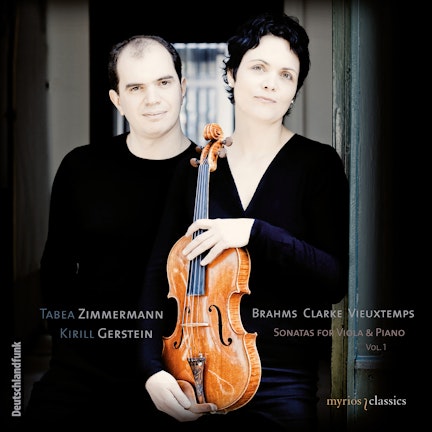
Brahms: Trio Op. 114. Robert & Clara Schumann: Romances
3/27/2026, 14 Tracks, 1:13:29
Featuring
Tabea Zimmermann
Javier Perianes
Jean-Guihen Queyras
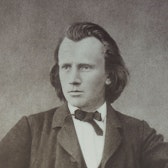
Johannes Brahms
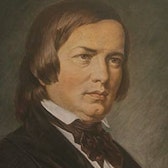
Robert Schumann
Clara Schumann
Joseph Joachim
Did you know?
1/7
Compositional Technique
The F.A.E. Sonata is based on a musical encryption: three notes (F-A-E) signifying 'Frei, aber einsam' (free, but alone), a motif frequently used by Joseph Joachim and Johannes Brahms.
Instruments
The viola versions of Brahms's Clarinet Trio and Clarinet Sonatas were created for pragmatic reasons, such as allowing Joseph Joachim and Clara Schumann to hear them in Mühlfeld's absence or to increase sales.
Composer's Artistic Vision
The composers on this album shared aesthetic convictions, including a belief in 'poetic' music that seeks hidden truth, a rejection of programmatic music, and the idea of chamber music as a realm of intimacy.
Composer Biography
Robert Schumann, a composer featured on this album, famously praised the young Johannes Brahms in his journal, writing: 'Visit from Brahms. A genius.'
Composition History
Johannes Brahms's Clarinet Trio Op. 114 was inspired by the 'exquisite clarinet playing' of Richard Mühlfeld, the principal clarinettist of the Meiningen court orchestra.
Composition History
The F.A.E. Sonata, a collaborative work on this album, was written by Robert Schumann, Johannes Brahms, and Albert Dietrich (a composer who studied with Schumann) as a playful challenge for violinist Joseph Joachim.
Composer Biography
Clara Schumann, a composer and pianist on this album, once believed women should not compose, writing in her diary in 1839: 'A woman must not desire to compose - not one has been able to do it...'
You might also enjoy...
Romantic Music for Viola and Piano
Romantic Music for Viola and Piano
Schumann - Schubert - Brahms
Romantic Works for Viola & Piano
Quantum Clarinet Trio
Brahms, Fauré & Schnittke: Piano Quartets
Indy: Clarinet Trio in B-Flat Major / Muczynski: Fantasy Trio / Brahms: Clarinet Trio in A Minor
Right Through The Bone - Chamber Music of Julius Röntgen