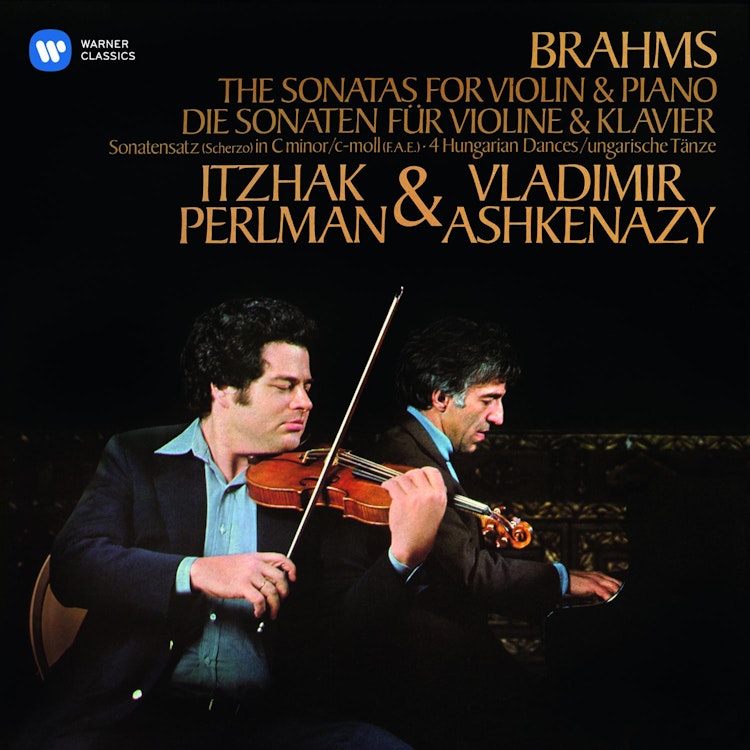
This album was recorded in No.1 Studio, Abbey Road, London, between April 20-23, 1983.
Composer Biography
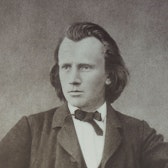
Johannes Brahms gained deep knowledge of writing for the violin through his friendships with leading violinists, especially Joseph Joachim.
Composer Biography
Brahms's enthusiasm for the violin began after meeting Hungarian virtuoso Eduard Reményi, with whom he formed a duo and toured Germany.
Composition History
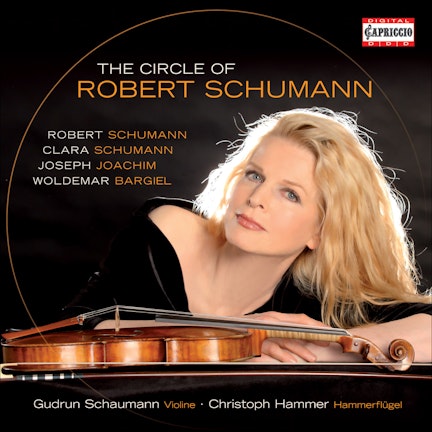
The Scherzo in C minor is the second movement of the collaborative 'F.A.E. Sonata', written by Brahms, Albert Dietrich, and Robert Schumann for violinist Joseph Joachim.
Compositional Technique
Unlike the bravura works popular at the time, Brahms's three violin sonatas avoid pure virtuosity and death-defying scales, focusing instead on a new mode of expression.
Cultural Impact
Brahms's twenty-one Hungarian Dances, originally for piano four hands, were very successful and helped establish his reputation.
Performer Biography
The recording partnership between violinist Itzhak Perlman and pianist Vladimir Ashkenazy began in October 1968, with a recording of the Franck Sonata and Brahms Horn Trio.