Brahms's genius is described as "Janus-like," looking both to the past (Beethoven) and to the future (Debussy's impressionism), making him neither purely Classical nor Romantic.
Performer Biography
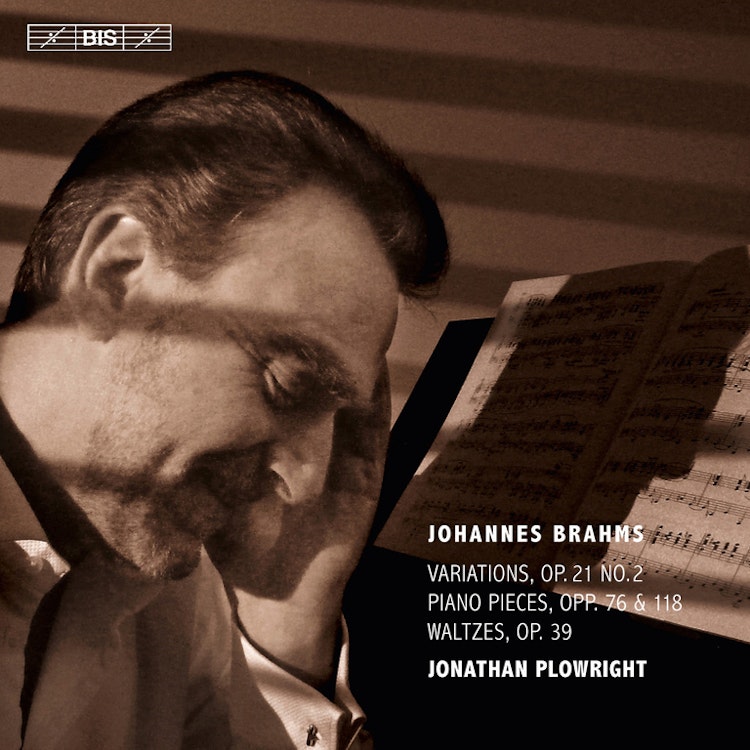
Jonathan Plowright, the pianist on this recording, is a gold medallist at the Royal Academy of Music and a Fulbright Scholar, and has won Gold Medal First Prize at the Royal Overseas League Competition and the European Piano Competition.
Critical Reception
Brahms's music was met with conflicting opinions; while some praised him, others like Hugo Wolf called his Second Piano Concerto "the nutritional equivalent of window glass" and Pyotr Ilyich Tchaikovsky called him "a giftless bastard!".
Composition History
Brahms's fascination with Hungarian gypsy music, evident in the Variations on a Hungarian Melody, Op. 21 No. 2, stemmed from his friendship and collaboration with violinist Eduard Reményi.
Composer Biography
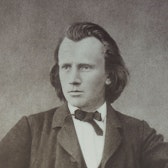
Johannes Brahms, the composer, was praised by Robert Schumann as "he that should come" and by Clara Schumann as "an eagle who has spread his wings" in his early works.
Recording & Production
This album is the third volume in Jonathan Plowright's series of Brahms's works for solo piano, with previous volumes receiving critical acclaim.
Composition History
Brahms composed his 16 Waltzes, Op. 39, for piano four hands, and later made two solo piano arrangements, including a simplified version, to target a wider market of gifted amateur pianists.
You might also enjoy...
Janacek: On an Overgrown Path
Clara Wieck Schumann: Piano Works
Radu Lupu plays Brahms
Brahms: Works for Solo Piano, Vol. 4
Brahms: Complete Works for Solo Piano
Stolen Moments - Johannes Brahms, Solo Piano Works
Brahms: Piano works
Brahms: Pièces pour piano
Brahms: Händel Variations
Nielsen: Piano Music
Janacek: Piano Sonata 1.X.1905, On the Overgrown Path & In the Mists