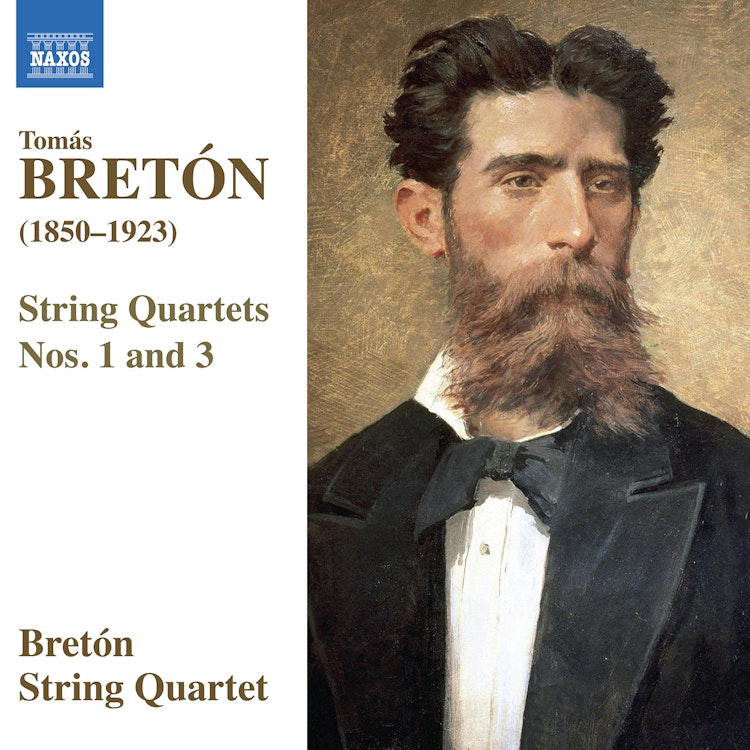
Bretón, unlike some of his contemporaries who focused on nationalism or international idioms, remained faithful to the historical roots of the string quartet genre, following the model of great German masters.
Compositional Technique
Bretón's String Quartet No. 1 is an overt tribute to the Viennese tradition, with its outer movements looking back to Classical sonata form and a fugal finale.
Composition History
Bretón's String Quartet No. 3 was premiered in 1910 by the young Cuarteto Vela, but its public life was cut short because the score was never published.
Historical Context
At the turn of the 20th century, Spain became part of the European chamber music touring circuit, and local ensembles encouraged Spanish composers to create their own repertoire.
Composition History
After the unsuccessful premiere of his opera Farinelli in 1902, Bretón focused on chamber music for the first time in his career, composing six large-scale works between 1904 and 1909.
Composition History
Bretón received a grant from the Real Academia de Bellas Artes in 1881, which allowed him to study in Rome, Milan, Vienna, and Paris for three years.
Composer Biography
Tomás Bretón, the composer, moved to Madrid in 1865 and supported himself by playing in minor theatres while pursuing his instrumental and composition studies.
You might also enjoy...
Wolosoff: Songs Without Words
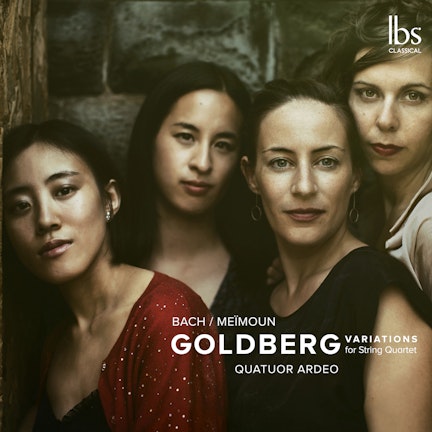
Bach: Goldberg Variations (Arr. F. Meïmoun for String Quartet)
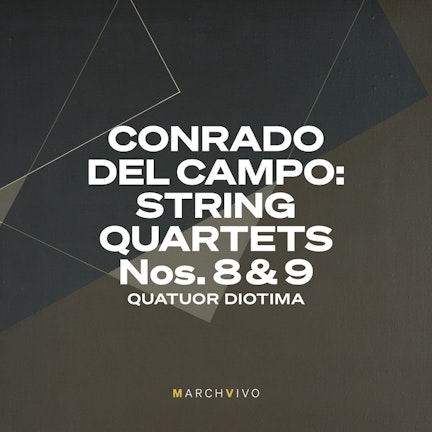
Conrado del Campo: String Quartets Nos. 8 & 9
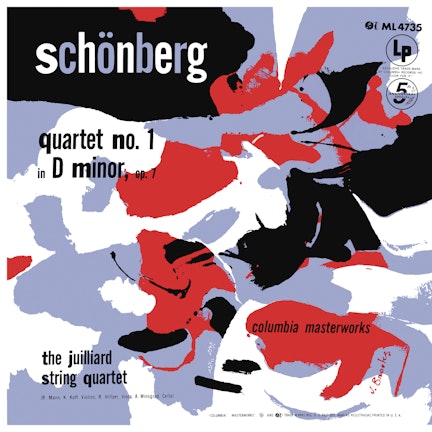
Schoenberg: String Quartet No. 1, Op. 7
Anton Rubinstein: String Quartets op. 17,3 and op. 17,2
Reich: WTC 9/11: I. 9/11/01
Three Essays: First Essay (Nimrod)
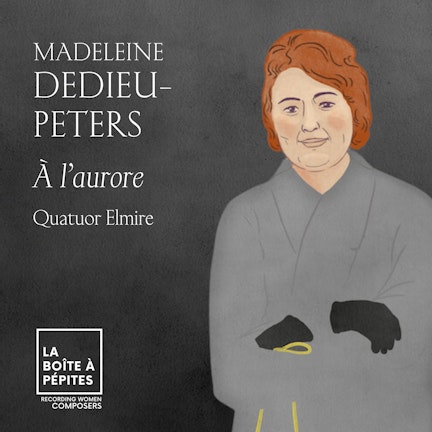
Madeleine Dedieu-Peters: À l'aurore
Shaw: Microfictions [volume 1]: V. Waking up on the early side…