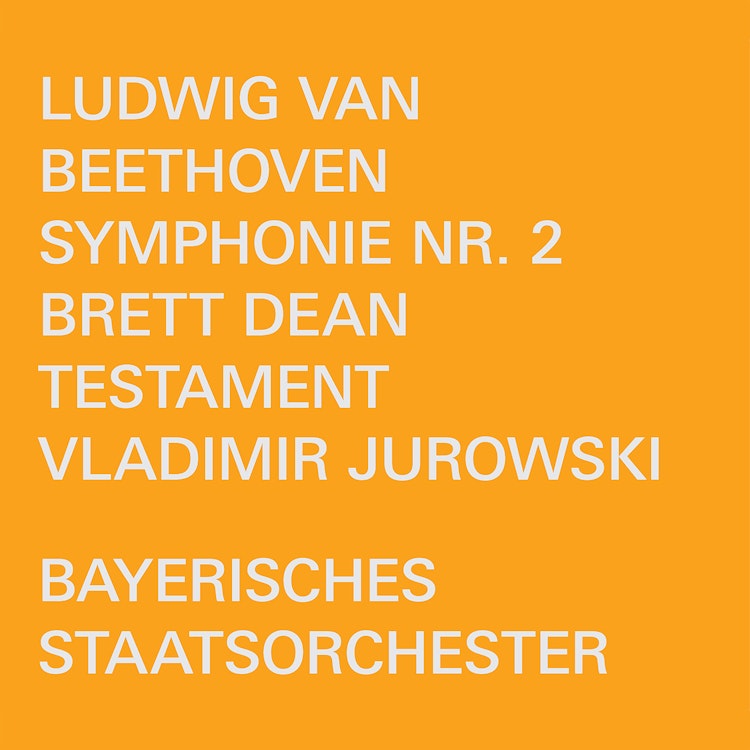
Beethoven's Second Symphony was described by contemporaries using terms like 'colossal', 'bizarre', and 'wild', and was also considered 'unduly expansive'.
Interpretation
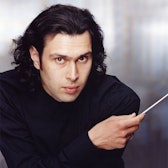
For this recording, the Bayerisches Staatsorchester played standing up, a practice that conductor Vladimir Jurowski believes generates a different energy and awareness of tonal enhancement.
Composition History
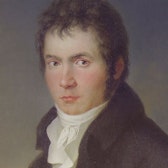
Beethoven composed his Second Symphony around the same time he wrote the Heiligenstadt Testament, a document revealing his inner struggle with encroaching deafness.
Composer's Artistic Vision
Conductor Vladimir Jurowski notes that Beethoven's Second Symphony is likely the first in which the composer's personal feelings and inner processes became central to the musical direction.
Compositional Technique
In his Second Symphony, Beethoven introduced the 'Scherzo' movement for the first time under this specific name, replacing the traditional minuet.
Compositional Technique
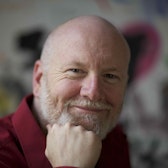
Brett Dean's 'Testament' uses bows without rosin and air blown through wind instruments to create a sound of 'hasty, breathless, but almost silent desperation', mimicking Beethoven's imagined quill writing.
Historical Context
The Bayerisches Staatsorchester, one of the world's oldest orchestras, traces its origins back to 1523 as the Munich court orchestra, with Orlando di Lasso as its first famous artistic director.