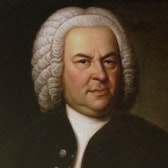
Pietism, a religious movement that emerged in the first half of the 18th century, became the official religious persuasion at the Danish court when Christian VI ascended the throne in 1730.
Instruments
The mandora and charango are stringed instruments of the lute family, both featured on this recording.
Performer Biography
Phemius Consort, the baroque ensemble on this recording, is named after the bard in Homer's Odyssey who entertained with song and harp-playing.
Composition History
Brorson's major work, Troens rare Klenodie (The Rare Treasure of Faith), was a collection of 283 hymns, 83 of which were original, five by his brothers, and the rest translations of German Pietist hymns.
Recording & Production
This album was recorded in the DXD audio format (Digital eXtreme Definition) at 352.8kHz/32bit, using a Pyramix DAW system with HORUS preamp/converter and Tango Controller.
Compositional Technique
Pietist hymns often used secular galant music, such as menuets and sarabandes, as templates for their tunes, reflecting the passionate nature of the faith.
Composer's Artistic Vision
H.A. Brorson, a key Danish hymn-writer, connected clear-headed Christian faith with poetic taste and talent in his great collection of hymns, Troens rare Klenodie (The Rare Treasure of Faith).
You might also enjoy...
Biber: Sacred And Profane
Biber: Sacred And Profane
Bach: Sonatas for Violin and Continuo; and works by Schmelzer, Schenk, Böhm and Erlebach
Sinners & Saints: The Ultimate Medieval & Renaissance Music Collection
The Official 30th Anniversary Edition
Für Orgel, Dudelsack, Schalmei und Flöte
À l'ombre d'un ormeau (Alpha Collection)
Italian Baroque Music Edition
Passion & Craftsmanship
Winter Journeys
KUK Festkonzert, Vol. 1
Hermosuras: Bellezza, sacralità e passione nel Regno di Spagna