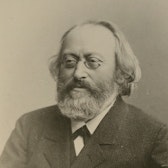
Max Bruch's lyrical character in his songs is presented in a "time loop" where earliest and latest pieces harmonize, reflecting his consistent style and avoidance of modern trends.
Recording & Production
Pianist Sascha El Mouissi added short, piano-based introductions to some songs that originally begin in unison, to prepare listeners for the music.
Critical Reception
A critic in 1863 preferred Bruch's simple, folk-style song of Tannhäuser and Venus (Op. 17 No. 8) to Wagner's grand operatic scene of similar content.
Composer's Artistic Vision
Max Bruch aimed to achieve "understandability of folk character" and eliminate "modern sentimentality" in his music by drawing on the curative power of folk songs.
Composer Biography
Max Bruch, the composer, spent his 1889 summer vacation in Johannaberg in the Teutoburg Forest, where he composed a "Liederspiel" inspired by Paul Heyse's novella Siechentrost.
Composer Biography
Emanuel Geibel (1815-1884), a German poet, was Max Bruch's most frequent "textual purveyor," providing texts for his songs from his earliest (Opus 7) to his latest (Opus 97) works.
Performer Biography
Baritone Rafael Fingerlos has performed at major venues like the Vienna State Opera, Semper Opera in Dresden, and Salzburg Festival, and has a central focus on song and concert fields.
You might also enjoy...
Liszt & Schumann: Songs & Lieder
Show Me The Way
Home, Sweet Home: Victorian Songs and Ballads, Vol. 2
Show Me The Way (Extended Version)
Silenced - Unsung Voices of the 20th Century
Lexia
Unerhört - Outrageaous. Krämerspiegel And Other Songs
Henze: Songs
Soirée parisienne
Italian Songs and Ballads
Charles Ives: A Portrait in Song
Guastavino, López Buchardo: Radio Buenos Aires (Flores Argentinas, Canciones)