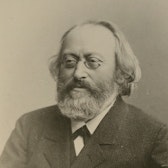
Max Bruch believed the true nature of music lay in melody, considering folk songs to be its sole, inexhaustible source.
Recording & Production
The Czech Radio Symphony Orchestra, one of the oldest Czech orchestras, has a rich history dating back to 1926, closely linked to the beginning of radio broadcasting.
Performer Biography
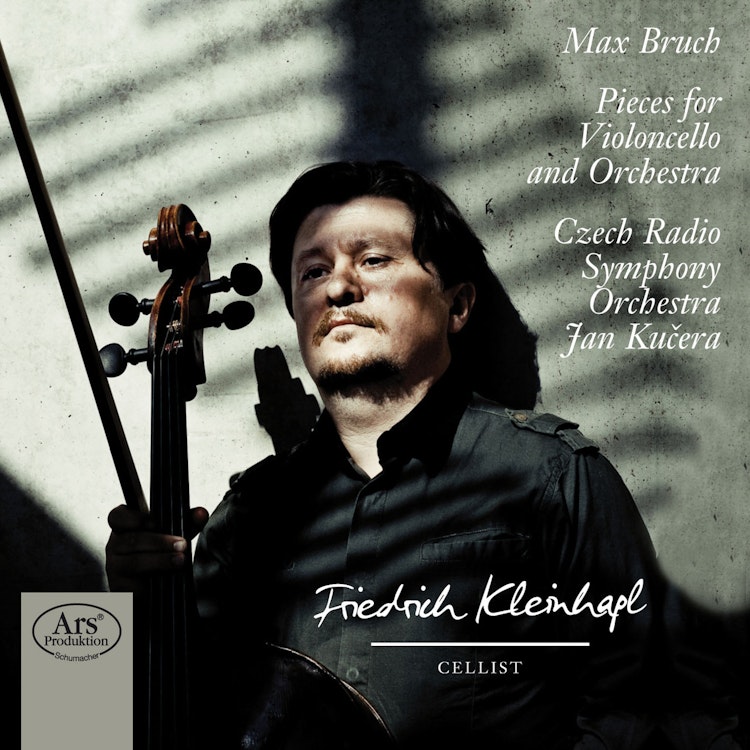
Cellist Friedrich Kleinhapl plays a Giovanni Battista Guadagnini cello from 1743, on loan from the Austrian National Bank's collection.
Historical Context
Max Bruch was a staunch opponent of the 'New German School' around Richard Wagner and later innovators like Richard Strauss, whom he vehemently criticized.
Interpretation
Friedrich Kleinhapl aims to free Max Bruch's music from the 'ashes of his personal history,' focusing on the enduring romantic 'fire' within the compositions.
Compositional Technique
Max Bruch, a Protestant, considered 'Kol Nidrei' not a Jewish composition but an artistic arrangement of an ancient Hebrew folk melody, which he learned in Berlin.
Composer Biography
Max Bruch, born in Cologne in 1838, achieved resounding success at age 27 with his Violin Concerto No. 1, but was unable to replicate this early triumph later in life.
You might also enjoy...
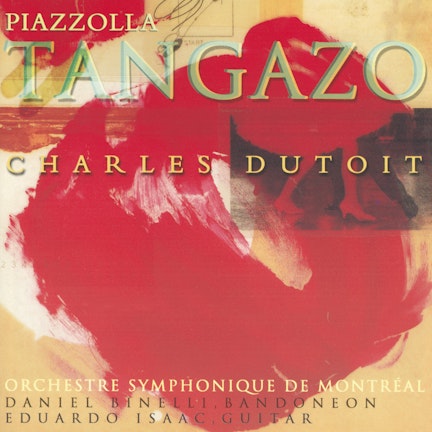
Piazzolla: Double Concerto; Oblivion; Tangazo etc
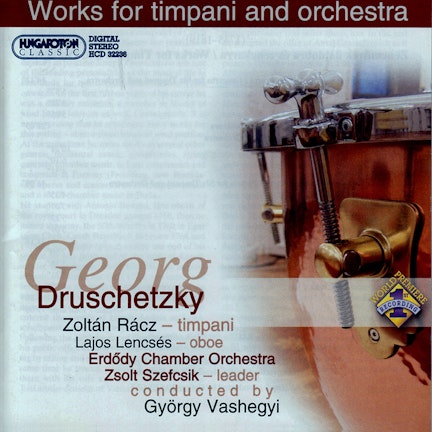
Druschetzky: Works for Timpani and Orchestra
Lee Actor: Saxophone Concerto
Welsh Classical Favourites
Welsh Classical Favourites
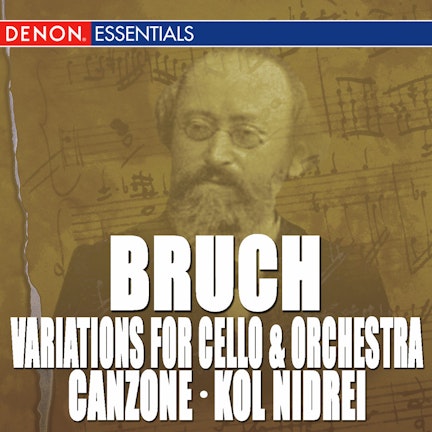
Bruch: Variations for Cello & Orchestra, Op. 47 - Canzone for Cello & Orchestra, Op. 55 - Kol Nidrei
Albéniz: Iberia
Luciano Berio / Trascrizioni orchestrali
The Green Album
Berg: Chamber Concerto; Three Pieces for Orch.; Concerto for Violin and Orchestra
Hindemith: Symphony in B-Flat Major & The 4 Temperaments - Berg: Chamber Concerto
Dutilleux: Symphony No. 1, Métaboles, Sur le même accord