Bruckner: Mass No. 2 in E Minor; Locus iste, Os iusti & Other Motets
9/29/2023, 13 Tracks, 1:09:30
Featuring
Stephen Layton
Polyphony
Britten Sinfonia
Anton Bruckner
Did you know?
1/7
Composer Biography
Anton Bruckner, the composer, began his involvement with devotional music before his teens, with his first surviving composition written around age eleven or twelve.
Composer's Artistic Vision
Bruckner's profound Roman Catholic faith was central to his music, and he asserted that composing was for him a true 'vocation' or Divine calling.
Compositional Technique
The opening of the Sanctus in Bruckner's Mass No. 2 in E minor is based on a figure taken from Palestrina's Missa brevis, reflecting the influence of Renaissance masters.
Historical Context
Bruckner was partly inspired by the ideas of the Cecilian Movement, founded in Germany in 1869, which advocated for simplification and devotional purity in church music.
Composition History
Bruckner's Mass No. 2 in E minor was dedicated to Bishop Josef Franz Rüdiger, who was an important artistic and spiritual father-figure to the composer.
Compositional Technique
The Mass No. 2 in E minor is unusual for its use of a wind band instead of a more conventional orchestra with strings.
Recording & Production
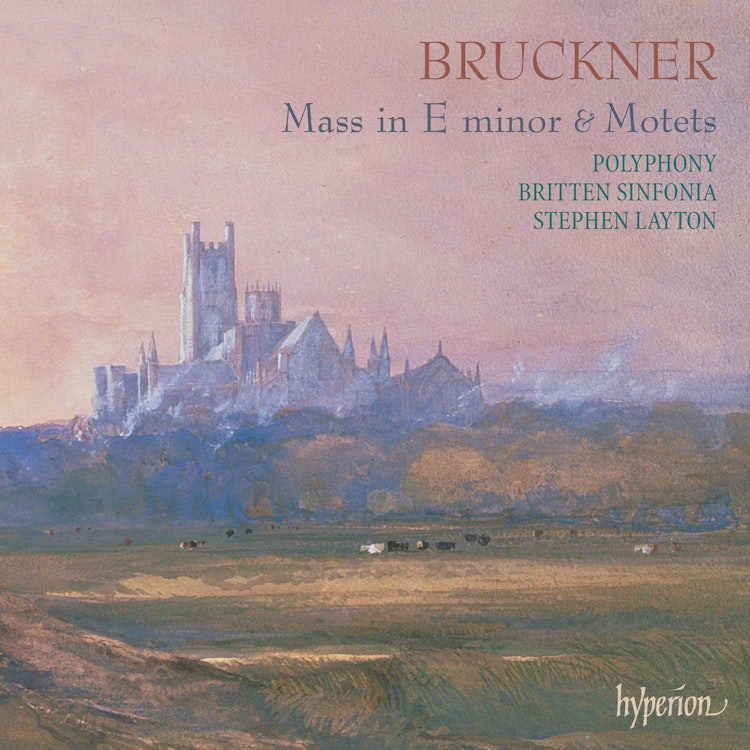
This album was recorded in Ely Cathedral, Cambridgeshire, with the Mass recorded in the Octagon Tower and the Motets in the Lady Chapel.
You might also enjoy...
Bruckner: Mass in E Minor / Motets
Bruckner: Motets
Anton Bruckner: Ave Maria · Christus factus est · Pange lingua · Vexilla regis · Virga Jesse · Locus iste · Tota pulchra es