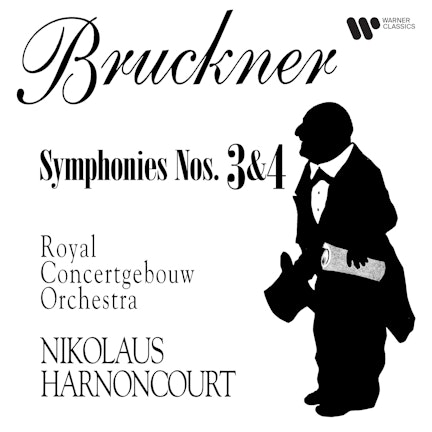
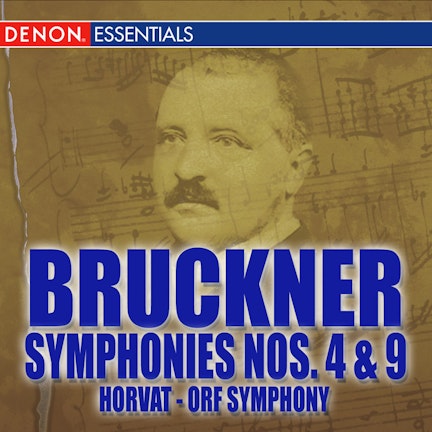
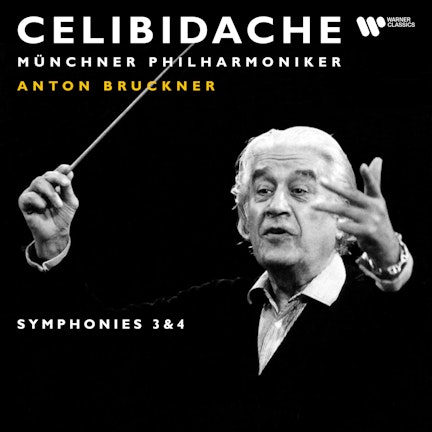
This album features a completed version of the Finale of Bruckner's Ninth Symphony by William Carragan, who also made an earlier completion attempt in 1979.
Composer Biography
Anton Bruckner, born in 1824, received his initial musical instruction from his schoolmaster father and later became a chorister at the monastery of St. Florian after his father's early death.
Critical Reception
Bruckner was a composer who contradicted the spirit of his era, and his music had to wait a long time to gain widespread acknowledgement, leading to much misunderstanding and criticism.
Composition History
Bruckner's symphonies often underwent years of growth and change, with many existing in several versions due to his self-criticism and willingness to make concessions for performances.
Compositional Technique
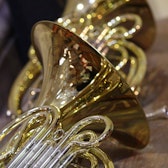
In his Seventh Symphony, Bruckner for the first time employed the Wagnerian tuba quartet, an instrument Richard Wagner had made to his own specifications for his Ring cycle.
Composition History
Bruckner's Ninth Symphony remained unfinished at his death, with only the first three movements completed and a pile of sketches for the final movement.
Composer's Artistic Vision
Bruckner's music embodies the visions of a devout, ordinary man, with his profound faith connecting him to the Romantic era.
You might also enjoy...
Bruckner: The Great Symphonies Nos. 4, 5, 7, 8 & 9
Bruckner: The Symphonies
Bruckner: Symphonies Nos. 3, 4, 6, 7 & 9 (Live)
Bruckner: Sinfonien
Bruckner: Symphonies Nos. 3, 4, 5 & 8
Bruckner: Symphonies 4 & 8
Bruckner: Symphonies Nos. 3 & 4
Bruckner: Symphonies Nos. 4 & 9 "Dem lieben Gott"
Bruckner : Symphonies Nos 4 & 7
Bruckner: Symphonies Nos. 4 "Romantic" & 7
Bruckner: Symphonies 4&6
Bruckner: Symphonies Nos 3 & 4, "Romantic"
Bruckner: Symphonies No. 3 "Wagner" & 4 "Romantic" (Live at Philharmonie am Gasteig, Munich)