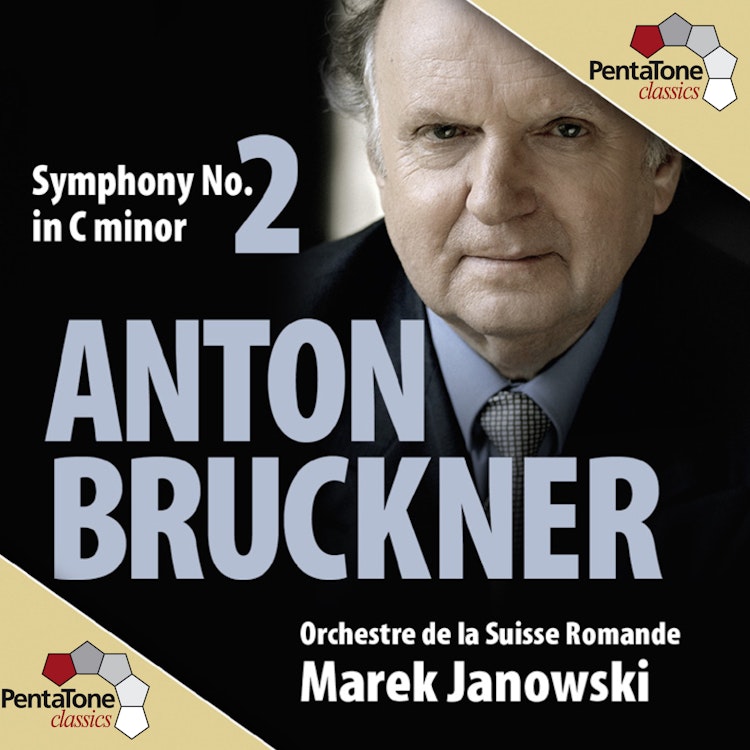
This recording uses William Carragan's 'Neue Gesamtausgabe' (new complete edition) of Bruckner's Symphony No. 2, specifically the 1877 version.
Composition History
The conductor Otto Dessoff initially rejected Bruckner's Symphony No. 2 as unplayable, but Bruckner later successfully conducted its premiere with the Vienna Philharmonic himself.
Composition History
Bruckner's Symphony No. 2 was his first symphony composed in Vienna, a city that initially 'cowed' him and where he faced disciplinary proceedings upon his return from successful organ tours.
Composition History
Bruckner's Symphony No. 2 in C minor is the least frequently performed of all his symphonies, despite the composer describing it as 'easiest for the audience to understand'.
Compositional Technique
Bruckner's Symphony No. 2 is known for its 'ubiquitous problem of his multiple versions', with three main versions existing from 1871-72, 1873-77, and 1892.
Compositional Technique
The Symphony No. 2 earned the nickname 'Symphony of Pauses' due to its numerous general pauses, which function as 'energy buffers' rather than mere structural demarcations.
Composer's Artistic Vision
Bruckner's core theme in Symphony No. 2 was the continuous testing, exploration, and expansion of symphonic possibilities, viewing it as an 'archaeological test-drilling' into the future of the symphony.
You might also enjoy...
Bruckner: Symphony No. 4, "Romantic"
Bruckner: Symphony No. 1
Dimension Vol. 10: Bruckner - Symphony No. 4
Bruckner: Symphony No. 6 in A Major, WAB 106 (Live)