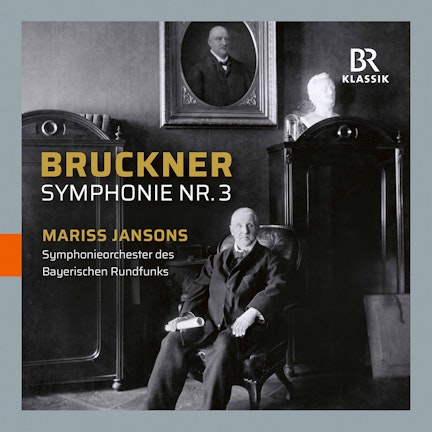
Bruckner conceived a slow dance-like theme in the Adagio of the Third Symphony as an elegy for his mother, a strong-minded and musical woman who, like him, was vulnerable to depression.
Compositional Technique
The 1873 original score of the Third Symphony contained direct quotations from Wagner's operas, including Die Walküre and Tristan und Isolde.
Composer's Artistic Vision
Bruckner dedicated his Third Symphony to his idol, Richard Wagner, and the work is explicitly identified as 'Wagner Symphony' on his manuscript scores.
Composer Biography
Bruckner's frequent revisions of his symphonies have been explained as a 'revision mania,' similar to his documented obsession with counting, as evidenced by an incident during a nervous breakdown where he tried to count leaves on a tree.
Composer's Artistic Vision
In the finale of the Third Symphony, Bruckner used a polka to represent the 'fun and joy in the world' and a chorale for its 'sadness and pain,' as he explained to his biographer August Göllerich.
Composition History
The first two published editions of Bruckner's Symphony No. 3 (1877 and 1889) were considered 'monstrous distortions' by musicologist Deryck Cooke, engineered by Bruckner's pupils like Franz Schalk.
Composition History
Bruckner's Symphony No. 3 is notorious for being the most-revised of all his symphonies, with at least nine alternative scores identified.
You might also enjoy...
Bruckner: Symphony No. 8
Bruckner : Symphony No.5
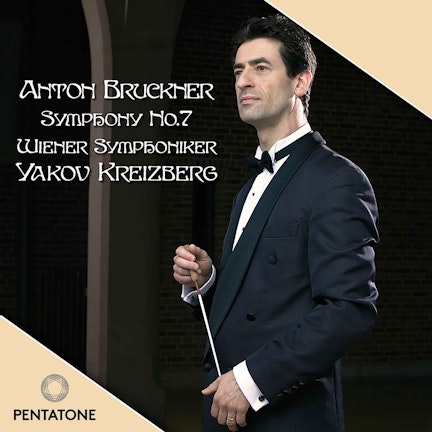
Bruckner: Symphony No. 7 in E Major
Bruckner: Symphony No. 7 in E Major
Bruckner: Symphonies No. 5 & 8 (Live at Philharmonie am Gasteig, Munich, 1993)
Anton Bruckner: Symphonie 8
Bruckner: Symphony No. 9 in D Minor, WAB 109
Bruckner: Symphony No. 4
Tandem Bruckner/Wand
Bruckner: Symphony No. 1 in C Minor, WAB 101 (1877 Linz Version, ed. R. Haas)
Bruckner: Symphony No.1 in C Minor, WAB 101 (Linz Version)
Bruckner: Symphony No. 1 in C Minor
Bruckner: Symphony No. 3 in D Minor, WAB 103 "Wagner" (1889 Version) [Live]