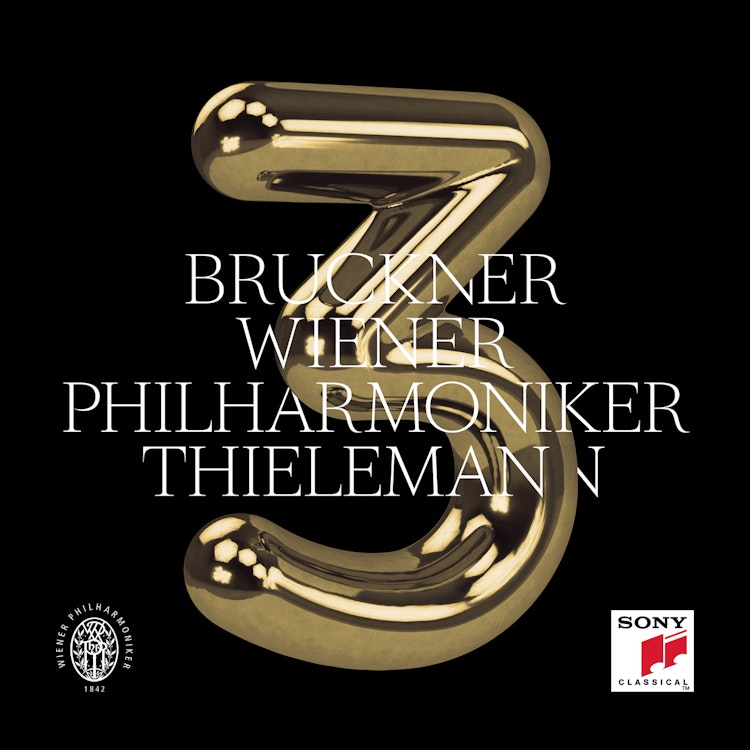
Bruckner: Symphony No. 3 in D Minor, WAB 103 (Edition Nowak)
4/23/2021, 4 Tracks, 1:01:13
Featuring
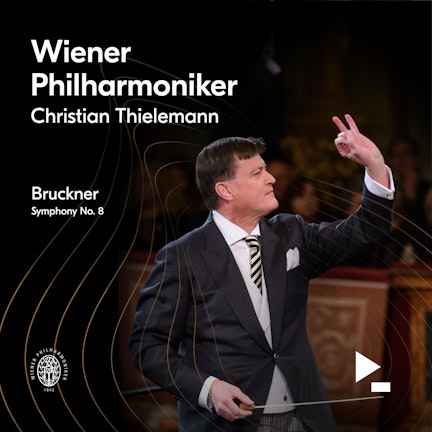
Christian Thielemann
Wiener Philharmoniker
Anton Bruckner
Did you know?
1/7
Composition History
In 1873, Bruckner visited Richard Wagner, who was consumed by Bayreuth Festival worries, to seek approval for the dedication of either his Second or Third Symphony.
Performer Biography
Christian Thielemann, the conductor, was deeply impressed by Bruckner's symphonies even as a schoolboy in the 1970s, attending live performances under Herbert von Karajan.
Critical Reception
The premiere of Bruckner's Third Symphony in Vienna in 1877 was "much-derided and sabotaged," with critic Eduard Hanslick stating they "did not understand his gigantic symphony."
Composer's Artistic Vision
Bruckner's music is described as elemental, radical, and uncompromising, with a strong affinity for nature and a sense of autochthonous earthiness.
Interpretation
According to conductor Christian Thielemann, Bruckner's music is a good training ground for conductors and a lifetime's work due to the need to differentiate between various types of slowness.
Composer Biography
Anton Bruckner, an Austrian-born organist and choirmaster, only encountered the 'progressive' music of his age, including Beethoven's Ninth Symphony and works by Wagner, around his 40th birthday.
Compositional Technique
Bruckner's Third Symphony, also known as his 'Wagner Symphony,' was a "work in progress" for seventeen years, resulting in three distinct versions due to revisions and reworks.
You might also enjoy...
Mahler: Symphony No.5
Bruckner: Symphony No. 5 in B-Flat Major, WAB 105 "Die Katholische" (Live)
Bruckner: Symphony No.8
Bruckner: Symphony No.4 "Romantic"
Mahler: Symphony No. 5
Mahler: Symphony No. 6 in A Minor: III. Andante moderato: a. Andante moderato
Bruckner: Symphony No.7 In E Major
Bruckner: Symphonies Nos. 3 & 4
Bruckner 8 - Christian Thielemann & Wiener Philharmoniker