Anton Bruckner, a cathedral organist, discovered his passion for Richard Wagner's music in 1863 at the age of 38, after attending a performance of Wagner's opera 'Tannhäuser'.
Critical Reception
The premiere of the second version of Bruckner's Third Symphony in 1877 was a disaster, with many audience members and even some orchestra members leaving in protest.
Interpretation
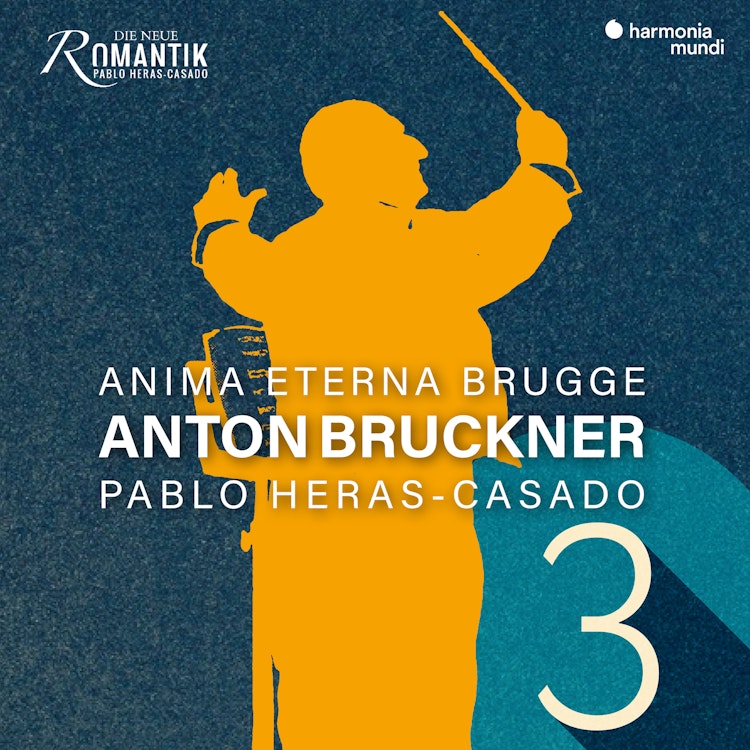
Anima Eterna Brugge performs this album on period instruments, aiming to recreate the sound of the era in which the music was composed.
Compositional Technique
The original version of Bruckner's Third Symphony includes almost literal quotations of the 'Sehnsuchtsmotiv' from Wagner's 'Tristan und Isolde' and the 'Sleep' leitmotiv from 'Die Walküre'.
Composer's Artistic Vision
Bruckner's Third Symphony, also known as the 'Wagner-Symphony', pays homage to Richard Wagner's art through musical bows and structural modeling, particularly in its original version.
Notable Performances
The original version of Bruckner's Third Symphony was not publicly performed until December 1, 1946, after World War II, in the war-torn city of Dresden.
Composition History
Bruckner offered the dedication of his new Third Symphony to Richard Wagner, whom he called the 'Master of all Masters', along with a keg of beer and snuff.