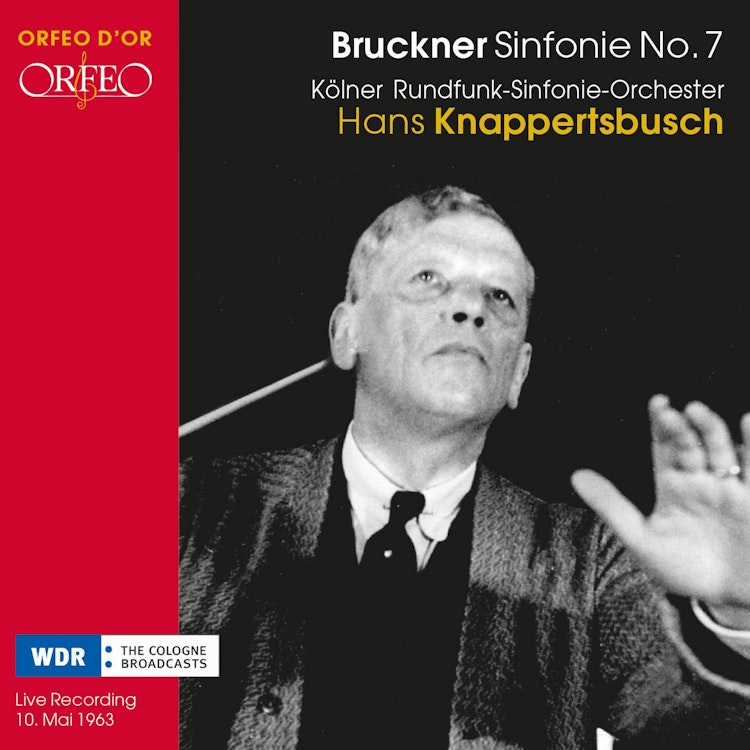
Bruckner: Symphony No. 7 in E Major, WAB 107 (1885 Version, Ed. A. Gutmann)
6/15/2018, 4 Tracks, 1:05:41
Featuring
Hans Knappertsbusch
WDR Sinfonieorchester Köln
Anton Bruckner
Did you know?
1/7
Performer Biography
Hans Knappertsbusch, the conductor on this album, was First Kapellmeister at the Leipzig municipal theatre in 1918, where Arthur Nikisch had premiered Bruckner's 7th Symphony 33 years prior.
Compositional Technique
A notable point of contention in Bruckner's Symphony No. 7 is the cymbal clash at the end of the slow movement, which was likely not intended by Bruckner but insisted upon by the premiere conductor, Arthur Nikisch.
Critical Reception
The premiere of Bruckner's Symphony No. 7 in Leipzig in 1884, and a second performance in Munich in 1885, were both hailed as exceptional successes.
Interpretation
Conductor Hans Knappertsbusch allowed himself a high degree of artistic freedom in his interpretations of Bruckner, using an organically 'breathing' tempo and pushing contrasts between quiet and dramatic passages.
Recording & Production
The very first complete recording of any Bruckner symphony was an acoustic recording of the Seventh, made in 1924 under Oskar Fried with the orchestra of the Staatsoper Berlin.
Composition History
Bruckner intended to dedicate his Symphony No. 7 to King Ludwig II of Bavaria, but the King died before he could reply to Bruckner's dedication letter.
Composition History
Unlike most of his other symphonies, Anton Bruckner's Symphony No. 7 in E major underwent no further changes by the composer himself.