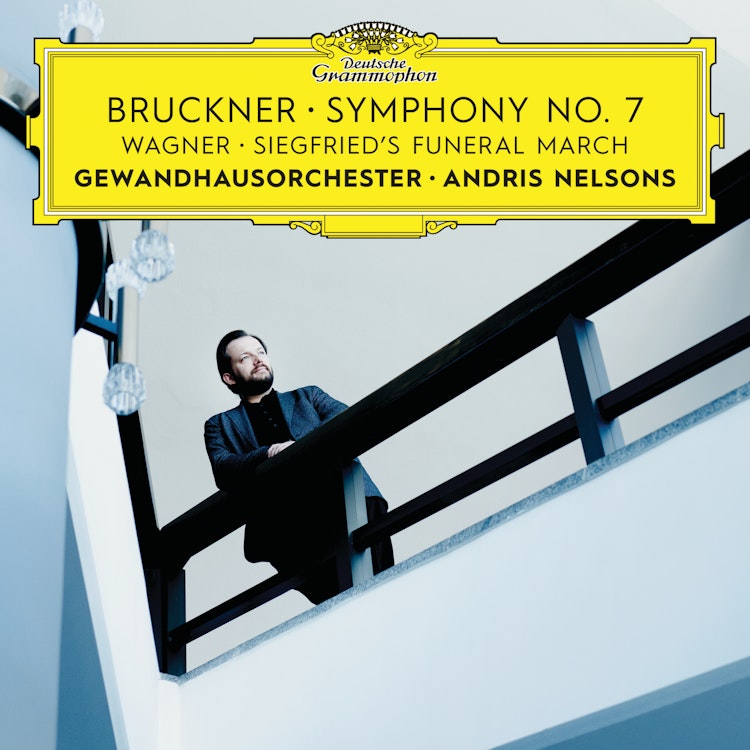
Bruckner: Symphony No. 7 / Wagner: Siegfried's Funeral March
4/6/2018, 5 Tracks, 1:16:48
Featuring
Andris Nelsons
Gewandhausorchester Leipzig
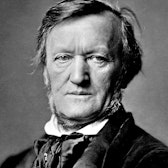
Richard Wagner
Anton Bruckner
Did you know?
1/7
Instruments
Bruckner included four 'Wagner tubas' (two tenor and two bass) and a contrabass tuba in the orchestra for the Adagio of his Seventh Symphony, marking their first appearance in any of his works.
Performer Biography
The Gewandhausorchester, led by its new Gewandhaus Kapellmeister (principal conductor) Andris Nelsons, has a long and distinguished history of performing Bruckner's symphonic works.
Compositional Technique
The Symphony No. 7 is unusual for Bruckner because he made very few changes to it after its composition between 1881 and 1883, meaning it has always been heard in its original form.
Composition History
Anton Bruckner, the composer, achieved his breakthrough with the Symphony No. 7 in E major in 1884, at the age of 60, after a long wait for recognition.
Notable Performances
The world premiere of Bruckner's Seventh Symphony took place in 1884 in Leipzig, performed by the Gewandhausorchester under Arthur Nikisch, who is considered the founder of the Leipzig Bruckner tradition.
Composer's Artistic Vision
Bruckner's Symphony No. 7 reflects his deep veneration for Richard Wagner, with its Adagio serving as a famous musical threnody in tribute to Wagner.
Recording & Production
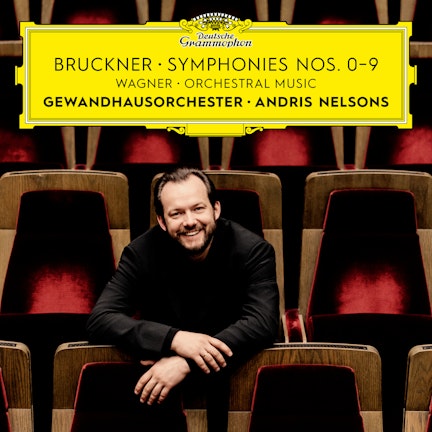
This album is part of a complete Bruckner cycle for Deutsche Grammophon, where the Leipzig Gewandhausorchester under Andris Nelsons records each symphony combined with music by Wagner.
You might also enjoy...
Raff: Symphony No. 10 in F Minor, Op. 213 "Zur Herbstzeit" & Ein feste Burg ist unser Gott, Op. 127
Raff: Symphony No. 5 "Lenore" & Ein feste Burg ist unser Gott
Raff: Symphony No. 5, 'Lenore'
Bruckner: Symphony No. 7 in E Major, WAB 107 (1885 Version, Gutmann Edition) [Live]
Raff: Symphony No. 5, 'Lenore'
Bruckner: Symphony No. 9 in D Minor, WAB 109 – Wagner: Götterdämmerung, WWV 86D (Excerpts) [Live]
Bruckner: Symphonies Nos. 0-9 – Wagner: Orchestral Music