Bruckner's Ninth Symphony is in D minor, a key he attempted three times for symphonies, and which was also used by Mozart (Requiem) and Beethoven (Ninth Symphony) for their final statements.
Critical Reception
The 1903 premiere of Bruckner's Ninth Symphony used a heavily altered version by Ferdinand Löwe, and it took 30 years for the original text to be performed.
Composition History
Bruckner began composing his Ninth Symphony in 1887, immediately after finishing his Eighth Symphony, conceiving it as his final major musical message.
Recording & Production
This album includes both an orchestral version and a two-piano arrangement of Bruckner's Ninth Symphony, reconstructed and adapted to the original score by Matthias Giesen and Klaus Laczika.
Interpretation
The two-piano version on this album aims to recreate the "workshop atmosphere" of early performances of Bruckner's symphonies, as the composer himself would have heard them.
Performer Biography
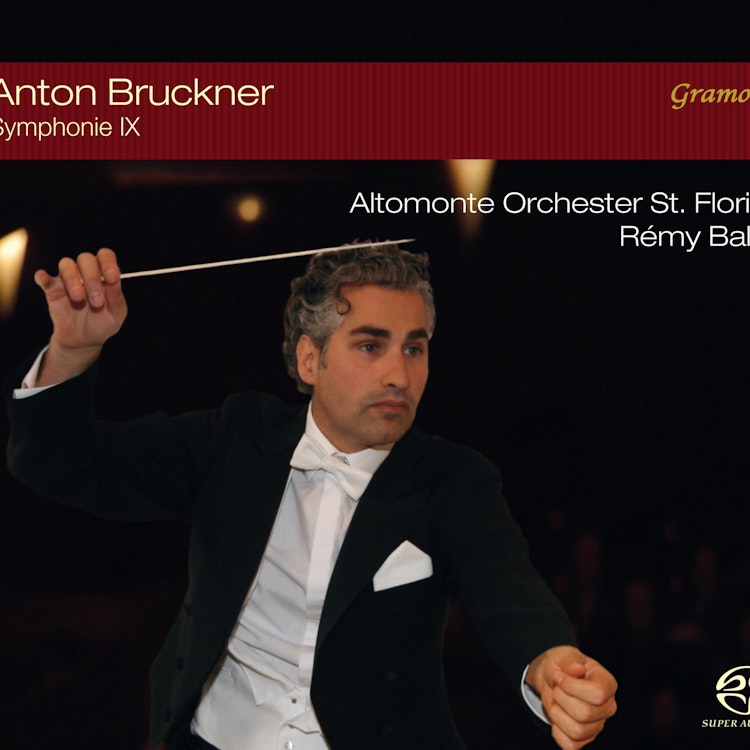
Rémy Ballot, the conductor, studied with Maestro Sergiù Celibidache and founded his own orchestra, Ensemble FAE, at the age of 18.
Composer's Artistic Vision
Anton Bruckner intended his Ninth Symphony, particularly the Adagio, to be his "farewell to life" and the most beautiful work he ever composed.