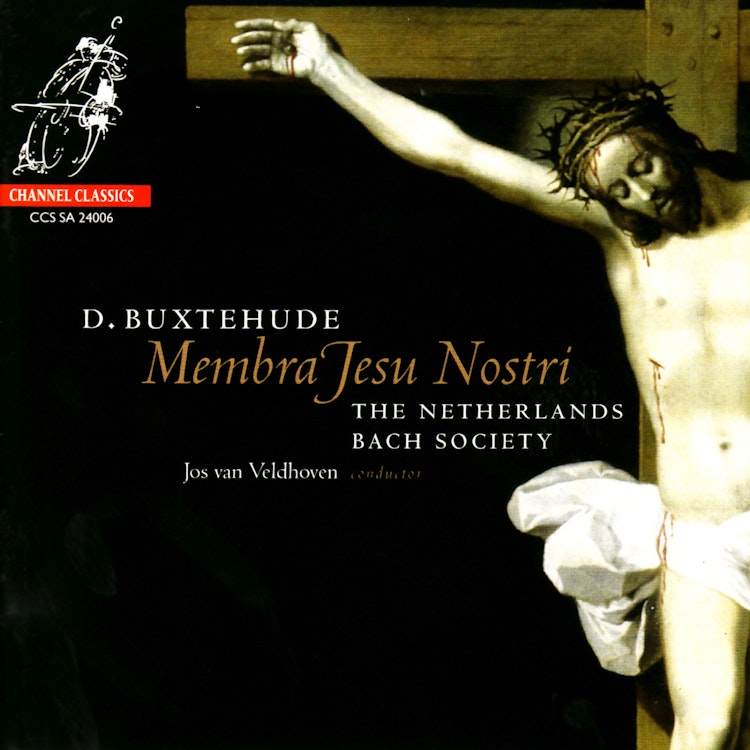
Buxtehude: Membra Jesu Nostri & Fried-und Freudenreiche Hinfahrth
1/1/2006, 9 Tracks, 1:12:25
Featuring
Jos van Veldhoven
Anne Grimm
Johannette Zomer
Peter de Groot
Andrew Tortise
Bas Ramselaar
De Nederlandse Bachvereniging
Dietrich Buxtehude
Did you know?
1/7
Composer Biography
Dietrich Buxtehude (1637-1707), the composer, was likely a student of Heinrich Scheidemann, an organist in Hamburg and a student of Sweelinck, around 1655.
Composer's Artistic Vision
Buxtehude's Membra Jesu Nostri, not intended for liturgical use, is seen as an expression of his personal religious experience and devotion.
Historical Context
The tablature notation used by Buxtehude was a 'secret writing' for North German organists, primarily for organ music, and was also economical with paper, useful for music sent abroad.
Composition History
Buxtehude's Membra Jesu Nostri is a seven-part cycle from 1680, dedicated to his lifelong friend Gustav Düben, a capellmeister at the Swedish court.
Compositional Technique
The text for Membra Jesu Nostri is based on a medieval passion hymn cycle, 'Salve mundi, salutare,' which meditates on the various body parts of the crucified Christ.
Recording & Production
This recording was made in November 2005 at Waalse Kerk, Amsterdam, Holland, using Bruel & Kjaer 4003 and Schoeps microphones.
Compositional Technique
Buxtehude copied Membra Jesu Nostri in German organ tablature, a notation style using letters and rhythm symbols, which was unusual for vocal music at the time.
You might also enjoy...
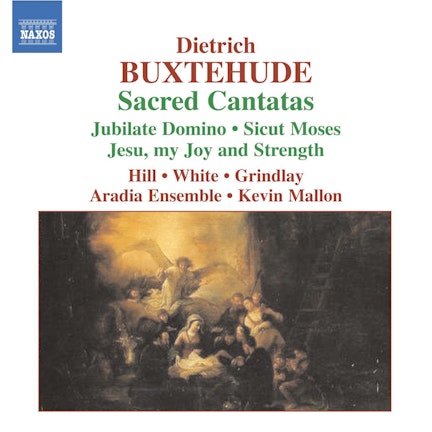
Buxtehude: Sacred Cantatas
Tunder: Sacred Works
Septem Verba & Membra Jesu Nostri
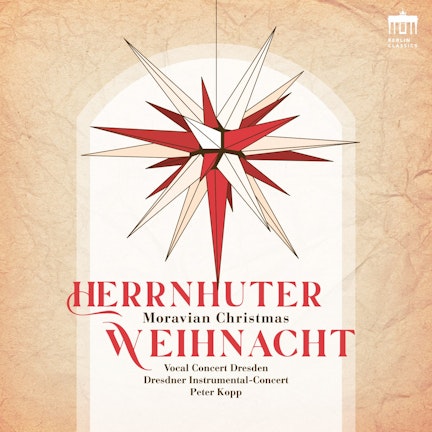
Herrnhuter Weihnachten (Moravian Christmas)
Ruppe: Christmas Cantata, Easter Cantata
Weckmann: Sacred Works
Buxtehude: 6 Cantatas
Buxtehude, D.: Wo Soll Ich Fliehen Hin / Befiehl Dem Engel, Dass Er Komm / Jesu, Meine Freude / Eins Bitte Ich Vom Herrn
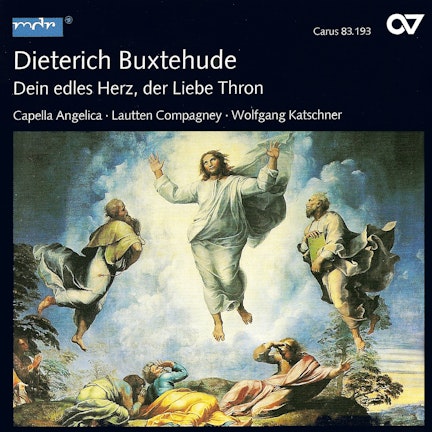
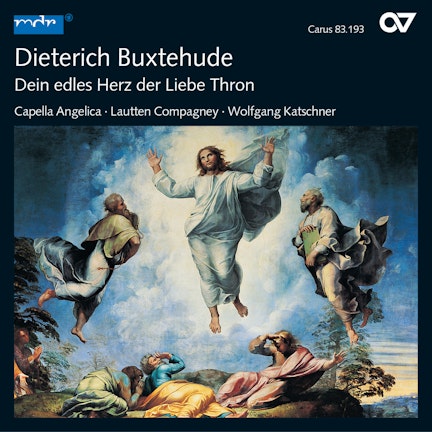
Buxtehude: Dein edles Herz, der Liebe Thron
Death & Devotion - Weckman, Tunder, Buxtehude & Ritter