Carl Philipp Emanuel Bach's music, with its sudden shifts between extreme emotions and uninhibited expressivity, reflects his belief that music should 'touch the heart above all'.
Composer Biography
Carl Philipp Emanuel Bach, the composer of these cello concertos, was the second son of Johann Sebastian Bach and was the most successful of all Bach's sons during his lifetime.
Interpretation
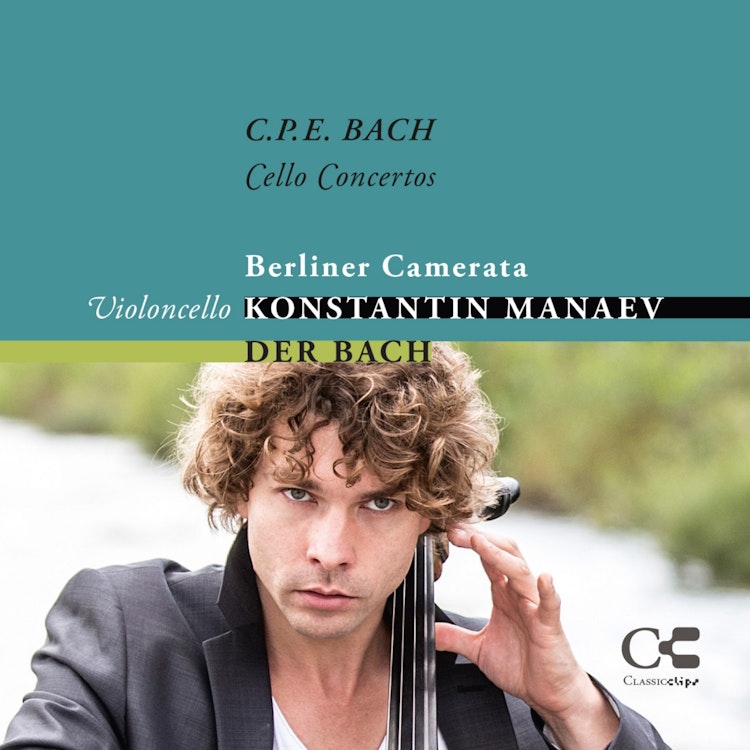
Konstantin Manaev, the cellist on this album, plays Bach's works on a cello from 1772, but chooses not to use gut strings or a Baroque bow, as their sound contradicts his stylistic feeling for the music's forward-looking nature.
Cultural Impact
Carl Philipp Emanuel Bach's works are considered a crucial link to Viennese Classicism, with Joseph Haydn stating he owed a great deal to Emanuel Bach.
Historical Context
Carl Philipp Emanuel Bach's employer in Berlin, Frederick the Great, did not appreciate Bach's innovative, emotional music, preferring composers like Johann Gottlieb Graun and Johann Joachim Quantz.
Composition History
Carl Philipp Emanuel Bach's three cello concertos, written between 1750 and 1753, are considered the very first original cello concertos composed in Germany.
Interpretation
For this recording, cellist Konstantin Manaev commissioned Uzbek composer Aziza Sadikova to write new, polystylistic cadenzas, blending Baroque motifs with contemporary techniques.
You might also enjoy...
C.P.E. Bach: Cello Concertos
Bach, C.P.E.: Cello Concertos - Wq. 170-172
Boccherini: Cello Concertos Nos 5/6/7/8
Boccherini: Cello Concertos Nos. 5-8
Shostakovich: Concertos for Cello and Orchestra Nos. 1 & 2
Muhly/Helbig/Long: Three Continents, Shostakovich: Cello Concerto No. 2