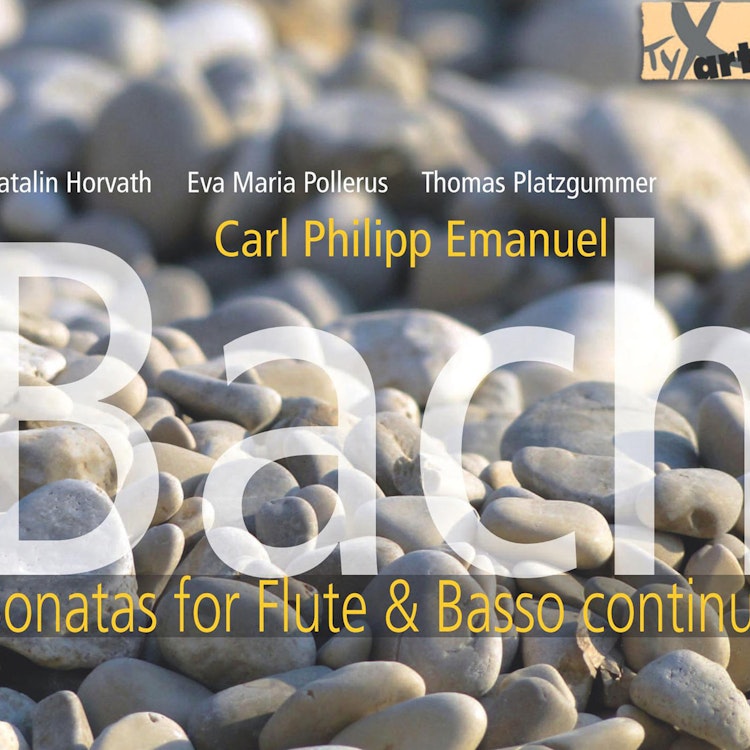
The performers on this album experimented with different continuo instruments—harpsichord with cello, fortepiano (square piano), and clavichord—to explore new understandings of Carl Philipp Emanuel Bach's music.
Historical Context
The transverse flute was considered a 'modern' instrument during Carl Philipp Emanuel Bach's time, enjoying 'special applause' and 'great preference' among Germans.
Composer Biography
Carl Philipp Emanuel Bach, the composer, was a renowned keyboard virtuoso and chamber harpsichordist for the Prussian king, Frederick II.
Compositional Technique
Carl Philipp Emanuel Bach's personal musical language underwent fundamental changes over the 50 years between his first and last flute sonatas, showcasing both chronological development and stylistic juxtapositions.
Instruments
The harpsichord was considered the 'king of keys' during the Bach sons' era, while the clavichord was favored for intimate musical dialogue, and the fortepiano was beginning to gain popularity.
Composer's Artistic Vision
Carl Philipp Emanuel Bach's music is characterized by a 'sensitive style' that aims to 'move' and 'speak from the soul', reflecting the enlightened musical era.
Composition History
The majority of Carl Philipp Emanuel Bach's flute music was composed during his 30 years serving Frederick II, the Prussian king and an enthusiastic flutist, at court in Berlin.
You might also enjoy...
Invocation
Nostalgia
Ostinato
Letters from Quarantine
Il postiglione: Sonatas for Recorder
Carl Philipp Emanuel Bach: 6 Sonaten für Flöte und Continuo
Luft - Air. Works For Saxophone And Bandoneon.
A Tribute to Bach
Handel: Complete Solo Sonatas
Kaspar Fürstenau: Twelve Original Compositions, Op. 35 / Six Duets, Op. 37
Frederick II The Great: Nine Sonatas for Flute & Harpsichord